You are using an out of date browser. It may not display this or other websites correctly.
You should upgrade or use an alternative browser.
You should upgrade or use an alternative browser.
Expert Answered Best stack to significantly increase libido in men
- Thread starter matteo91
- Start date
Libido, erectile issues, fertility and sexual health, on cycle or off.

Hi,
We’ll try to help you, but first we need a bit more context. Please answer a few questions.
We’ll try to help you, but first we need a bit more context. Please answer a few questions.
- Your weight, height, and age
- Your training experience (if any), and whether you’re physically active
- Are you taking any PEDs, medications, or supplements?
- Is your libido significantly different from what it was in your prime?
- What bloodwork do you have from the last 6 months?
- Chronic conditions
- Thread Author
- #3
Hi Sam, thanks for being willing to help!Hi,
We’ll try to help you, but first we need a bit more context. Please answer a few questions.
- Your weight, height, and age
- Your training experience (if any), and whether you’re physically active
- Are you taking any PEDs, medications, or supplements?
- Is your libido significantly different from what it was in your prime?
- What bloodwork do you have from the last 6 months?
- Chronic conditions
1. Age, height and weight: I'm 35 years old, 190 cm (6'3") tall and weigh 110 kg (242 lbs).
2. Training and activity: I train every day, usually doing around 75 minutes of weight training followed by 15 minutes of cardio, typically on a stationary bike.
3. Medications and supplements: I'm currently taking:
- Sertraline 50 mg daily
- Euthyrox (levothyroxine) 75 mcg daily
- Testosterone gel 20 mg daily as TRT
- Bupropion (Wellbutrin) 150 mg daily
I also take several sports supplements, although I've recently been simplifying my supplement stack.
4. Libido: This is something I'm trying to understand better, particularly in relation to my hormone levels and medications.
5. Recent bloodwork: My latest blood tests have generally been good, including my testosterone, estradiol and prolactin levels. My total cholesterol is quite low at 90 mg/dL, with HDL at 30 mg/dL and LDL at 60 mg/dL. My cortisol was also slightly below the laboratory reference range, at 4.8 when the lower limit was 6.
6. Chronic conditions: I have hypothyroidism, which is treated with levothyroxine. I'm also on TRT following previously low testosterone levels.
Is there anything else you think would be useful for me to share? Thanks again for your help!
Thanks for describing your situation. Please show me your latest bloodwork, that will help me somewhat. Also, tell me when you first noticed that your libido had become lower than before?
Also, how long have you been taking sertraline and bupropion? Did you start them at the same time, or did you start with one medication first? And what symptoms did your doctor prescribe this combination to treat? Depression and any other symptoms?
If we put the bloodwork aside for now, I see two potential reasons that could be lowering your libido. But we’ll go through them step by step and try to get to the bottom of it.
At your age, libido problems most likely need to be looked for in areas that aren’t directly related to testosterone levels, although that can’t be ruled out either.
Possible causes are:
Also, how long have you been taking sertraline and bupropion? Did you start them at the same time, or did you start with one medication first? And what symptoms did your doctor prescribe this combination to treat? Depression and any other symptoms?
If we put the bloodwork aside for now, I see two potential reasons that could be lowering your libido. But we’ll go through them step by step and try to get to the bottom of it.
At your age, libido problems most likely need to be looked for in areas that aren’t directly related to testosterone levels, although that can’t be ruled out either.
Possible causes are:
- Sertraline, because its direct action is to increase serotonin without selectively activating any particular receptors. Serotonin itself is an inhibitory neurotransmitter that can cause apathy and reduced libido through 5-HT2A / 5-HT2C receptors.
- Possible CNS overload from daily strength training, but we’ll look into that further and put the whole picture together.
- Possibly both of these factors.
- Thread Author
- #5
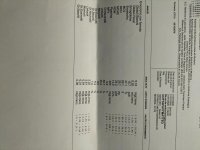
Thanks for your detailed response! I'll send you photos of my latest bloodwork shortly.
Regarding my libido, I'll try to give you a clearer picture of my situation as well.
Sertraline was prescribed by my psychiatrist to treat persistent depressive symptoms (dysthymia) and anxiety. I started taking sertraline first, and about a year later, bupropion was added to my treatment.
I also forgot to mention that I take quetiapine XR 150 mg every evening before bed.
So my current psychiatric medications are sertraline 50 mg, bupropion 150 mg, and quetiapine XR 150 mg daily.
I'll send you my bloodwork so we can look at the full picture. Thanks again for taking the time to help me figure this out!
Regarding my libido, I'll try to give you a clearer picture of my situation as well.
Sertraline was prescribed by my psychiatrist to treat persistent depressive symptoms (dysthymia) and anxiety. I started taking sertraline first, and about a year later, bupropion was added to my treatment.
I also forgot to mention that I take quetiapine XR 150 mg every evening before bed.
So my current psychiatric medications are sertraline 50 mg, bupropion 150 mg, and quetiapine XR 150 mg daily.
I'll send you my bloodwork so we can look at the full picture. Thanks again for taking the time to help me figure this out!
Attachments
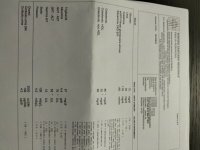
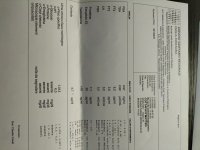
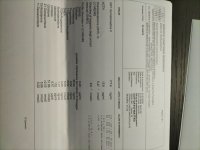
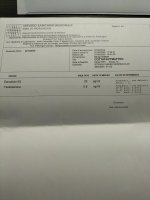
Okay, first I’d like to figure out one thing — did you notice any changes in your libido while taking sertraline? Not necessarily right away, but for example after a month or several months?Thanks for your detailed response! I'll send you photos of my latest bloodwork shortly.
Regarding my libido, I'll try to give you a clearer picture of my situation as well.
Sertraline was prescribed by my psychiatrist to treat persistent depressive symptoms (dysthymia) and anxiety. I started taking sertraline first, and about a year later, bupropion was added to my treatment.
I also forgot to mention that I take quetiapine XR 150 mg every evening before bed.
So my current psychiatric medications are sertraline 50 mg, bupropion 150 mg, and quetiapine XR 150 mg daily.
I'll send you my bloodwork so we can look at the full picture. Thanks again for taking the time to help me figure this out!
Regarding quetiapine, I suspected it was part of this combination. Why were you prescribed 150 mg specifically? Have you tried lower doses of 25–50 mg if it was prescribed solely to improve sleep?
For now, I want to gather more information, and then I’ll write to you with the conclusions I’ve reached.
I noticed that the bloodwork you provided shows two different testosterone and estradiol results: in one test, testosterone is >16 ng/ml and estradiol is 39 pg/ml, while in the other, testosterone is 6.8 ng/ml and estradiol is 25 pg/ml.Thanks for your detailed response! I'll send you photos of my latest bloodwork shortly.
Regarding my libido, I'll try to give you a clearer picture of my situation as well.
Sertraline was prescribed by my psychiatrist to treat persistent depressive symptoms (dysthymia) and anxiety. I started taking sertraline first, and about a year later, bupropion was added to my treatment.
I also forgot to mention that I take quetiapine XR 150 mg every evening before bed.
So my current psychiatric medications are sertraline 50 mg, bupropion 150 mg, and quetiapine XR 150 mg daily.
I'll send you my bloodwork so we can look at the full picture. Thanks again for taking the time to help me figure this out!
Could you please tell me when these two tests were done and what you were using at the time of each one — which medications and dosages?
- Thread Author
- #9
Regarding my libido, it was already practically nonexistent before I started taking antidepressants or antipsychotics. At the time, I was struggling with depression and eating very little, so I suspect these factors may have played a role. That's why I can't really say that sertraline caused the initial loss of libido.I noticed that the bloodwork you provided shows two different testosterone and estradiol results: in one test, testosterone is >16 ng/ml and estradiol is 39 pg/ml, while in the other, testosterone is 6.8 ng/ml and estradiol is 25 pg/ml.
Could you please tell me when these two tests were done and what you were using at the time of each one — which medications and dosages?
As for quetiapine, I was prescribed 150 mg XR because sertraline alone wasn't giving me a sufficient response, and I was also struggling with insomnia. My psychiatrist added quetiapine as part of the overall treatment. Honestly, I'm a little afraid of lowering the dose because I'm doing really well on my current medication regimen, and I wouldn't want to risk destabilizing my mental health. I'd rather discuss any changes with my psychiatrist first.
Regarding the bloodwork, the two tests were done approximately two weeks apart. At the time of the first test, my testosterone gel dose was 30 mg daily, which turned out to be too high for me. My total testosterone was above 16 ng/mL and estradiol was 39 pg/mL.
After reducing the dose to 20 mg daily (two pumps of Tostrex gel), my testosterone was 6.8 ng/mL and estradiol was 25 pg/mL. These are my current levels on the lower dose, which seems to be much more suitable for me.
I hope this helps clarify things. Thanks again for taking the time to look into my situation!
Were there any specific reasons for your condition, such as a difficult life situation that could have triggered it, or did it develop on its own without any obvious crisis?Regarding my libido, it was already practically nonexistent before I started taking antidepressants or antipsychotics. At the time, I was struggling with depression and eating very little, so I suspect these factors may have played a role. That's why I can't really say that sertraline caused the initial loss of libido.
As for quetiapine, I was prescribed 150 mg XR because sertraline alone wasn't giving me a sufficient response, and I was also struggling with insomnia. My psychiatrist added quetiapine as part of the overall treatment. Honestly, I'm a little afraid of lowering the dose because I'm doing really well on my current medication regimen, and I wouldn't want to risk destabilizing my mental health. I'd rather discuss any changes with my psychiatrist first.
Regarding the bloodwork, the two tests were done approximately two weeks apart. At the time of the first test, my testosterone gel dose was 30 mg daily, which turned out to be too high for me. My total testosterone was above 16 ng/mL and estradiol was 39 pg/mL.
After reducing the dose to 20 mg daily (two pumps of Tostrex gel), my testosterone was 6.8 ng/mL and estradiol was 25 pg/mL. These are my current levels on the lower dose, which seems to be much more suitable for me.
I hope this helps clarify things. Thanks again for taking the time to look into my situation!
If your treatment is giving you excellent results right now, that’s already a good reference point. I’d like to know a little more about the symptoms you had before starting treatment for depression, when they began, and how long it took for them to improve.
Regarding quetiapine, talking to your doctor would be a great approach. I’ll explain my reasoning. If quetiapine is prescribed only as a sedative before sleep, it is usually prescribed at 25–50 mg, sometimes higher, but its sedative effect won’t necessarily be much stronger at 150 mg compared with 50 mg. However, in some people, doses of 100–150 mg may affect dopamine. And dopamine, as you know, is one of the main neurotransmitters involved in arousal. When it comes to sedation, its effect is mediated through H₁ histamine receptors, and at 25 mg the effect is already significant. At the same time, even doses of 12.5 or 6.25 mg work for some people.
I wouldn’t make any sudden changes, but I would discuss gradually reducing the dosage with your doctor, for example gradually going down to 100 mg, then 75 mg, and so on until you reach a dose that is effective for you.
Regarding the bloodwork, thanks, it’s much clearer now. One more thing I wanted to ask: are you using HCG together with testosterone?
- Thread Author
- #11
No, I'm not taking HCG alongside testosterone. I'm only using testosterone gel as TRT.Were there any specific reasons for your condition, such as a difficult life situation that could have triggered it, or did it develop on its own without any obvious crisis?
If your treatment is giving you excellent results right now, that’s already a good reference point. I’d like to know a little more about the symptoms you had before starting treatment for depression, when they began, and how long it took for them to improve.
Regarding quetiapine, talking to your doctor would be a great approach. I’ll explain my reasoning. If quetiapine is prescribed only as a sedative before sleep, it is usually prescribed at 25–50 mg, sometimes higher, but its sedative effect won’t necessarily be much stronger at 150 mg compared with 50 mg. However, in some people, doses of 100–150 mg may affect dopamine. And dopamine, as you know, is one of the main neurotransmitters involved in arousal. When it comes to sedation, its effect is mediated through H₁ histamine receptors, and at 25 mg the effect is already significant. At the same time, even doses of 12.5 or 6.25 mg work for some people.
I wouldn’t make any sudden changes, but I would discuss gradually reducing the dosage with your doctor, for example gradually going down to 100 mg, then 75 mg, and so on until you reach a dose that is effective for you.
Regarding the bloodwork, thanks, it’s much clearer now. One more thing I wanted to ask: are you using HCG together with testosterone?
Regarding my mental health history, I've struggled with depression and anxiety for most of my adult life. I'm 35 now, and I first started receiving psychiatric treatment when I was around 21–22.
My first depressive episode seemed to develop without any specific trigger or obvious life crisis. Over the years, I've experienced several relapses. Whenever my psychiatrist recommended reducing or stopping my medication, my symptoms would typically return within three to four months after discontinuation.
After years of treatment and trying different psychiatrists, my current psychiatrist decided to add quetiapine because she suspected that there might be some bipolar-spectrum features in addition to dysthymia, although this was a possibility rather than a confirmed diagnosis. I've never experienced clear episodes of mania or hypomania.
I have to admit that adding quetiapine made a significant difference in how I feel. That's why I'm hesitant to reduce the dose: it's not just about sleep, but about maintaining the overall improvement in my mental health. However, I understand your reasoning, and I'll discuss it with my psychiatrist to see whether there might be room for adjustments without compromising my stability.
At the same time, I'm honestly tired of struggling with low libido. It's affecting my confidence and making it harder for me to connect romantically with women. I'd really like to find a solution and feel like myself again, including sexually. For me, it's not just about sexual performance; it's also about feeling masculine, having sexual desire, and being able to experience that side of life naturally.
I really appreciate you taking the time to help me investigate this. I want to understand the underlying causes and find a solution that improves my libido without sacrificing the mental health progress I've made.
Okay, everything you’ve described changes the situation somewhat.
First, I want to explain why I need all this information. Usually, libido is affected either by hormonal factors or neurochemical ones. You could call it neurohormonal to simplify things, but I separate them so we can understand that there are relatively “coarse” mechanisms of influence and more subtle ones. The first category is something we can determine fairly accurately through bloodwork. The second is our neurotransmitter balance — something we can’t really measure because it’s too complicated outside a scientific laboratory and complex experiments. We can only make indirect assumptions and try to change something experimentally, then wait for some “magic” changes and observe the effects. And what any psychiatrist does is essentially this kind of “magic” manipulation of your brain. If you felt relief, then why it happened matters much less than the fact that it worked. That’s how psychiatry works. And you shouldn’t go into this crystal house with a hammer in your hands, if you understand what I mean.
What I’m getting at is that I don’t see anything in your bloodwork that we could potentially work with to change the situation. Maybe the guys here can suggest something else.
But as far as things outside psychiatric medications that could potentially be looked at or added, there are only a few options that, purely hypothetically, might affect the situation.
When talking specifically about serotonin-related suppression of libido and sexual function, 5-HT₂A and 5-HT₂C are of particular interest, as well as 5-HT₃ in some components of sexual dysfunction. By increasing overall serotonergic transmission through SERT, sertraline may increase signaling through 5-HT₂A/5-HT₂C and thereby reduce libido, impair arousal, and especially delay orgasm/ejaculation.
So in theory, your doctor could consider switching sertraline to something else that would sufficiently activate 5-HT1A while blocking 5-HT₂A and 5-HT₂C receptors — for example, mirtazapine. Again, this isn’t a call to action, but rather a suggestion to discuss it with your doctor and ask for their opinion.
First, I want to explain why I need all this information. Usually, libido is affected either by hormonal factors or neurochemical ones. You could call it neurohormonal to simplify things, but I separate them so we can understand that there are relatively “coarse” mechanisms of influence and more subtle ones. The first category is something we can determine fairly accurately through bloodwork. The second is our neurotransmitter balance — something we can’t really measure because it’s too complicated outside a scientific laboratory and complex experiments. We can only make indirect assumptions and try to change something experimentally, then wait for some “magic” changes and observe the effects. And what any psychiatrist does is essentially this kind of “magic” manipulation of your brain. If you felt relief, then why it happened matters much less than the fact that it worked. That’s how psychiatry works. And you shouldn’t go into this crystal house with a hammer in your hands, if you understand what I mean.
What I’m getting at is that I don’t see anything in your bloodwork that we could potentially work with to change the situation. Maybe the guys here can suggest something else.
But as far as things outside psychiatric medications that could potentially be looked at or added, there are only a few options that, purely hypothetically, might affect the situation.
- Add HCG 250 IU three times a week. For some people, this helps specifically with libido while on cycle or TRT. There are some hypothetical reasons why this might work.
- Add Proviron 50–100 mg per day. This is obviously a fairly crude approach, simply because Proviron is one of the compounds structurally closest to DHT. Maybe it will work, maybe it won’t. Whether it could make things worse alongside all the psychiatric medications you’re taking is difficult to say. You could ask your psychiatrist for their opinion, because ANY anabolic steroid can enter the brain and have some degree of activity there.
- Ask your psychiatrist why exactly quetiapine was prescribed and what role they believe it serves. If it’s only about sleep, there are medications that also work through histamine receptors without affecting the dopamine system. And in general, H1 receptor blockade isn’t necessary for improving sleep. For example, DORA-class medications are increasingly entering clinical practice and preserve the natural architecture of sleep better. If we’re talking about signs of bipolar spectrum disorder, then it’s unclear why the dose is only 150 mg. Usually, that’s a starting dose and it’s increased afterward if it’s well tolerated. If you clarify this point, it would be useful information.
- Anxiety is suppressed through serotonin — that’s a fact of clinical practice. But at the same time, you were prescribed bupropion, which acts primarily through norepinephrine and dopamine. It’s often added when there’s insufficient energy, motivation, anhedonia, or sexual side effects. Perhaps your doctor added bupropion specifically for this reason, although that doesn’t necessarily mean it worked.
When talking specifically about serotonin-related suppression of libido and sexual function, 5-HT₂A and 5-HT₂C are of particular interest, as well as 5-HT₃ in some components of sexual dysfunction. By increasing overall serotonergic transmission through SERT, sertraline may increase signaling through 5-HT₂A/5-HT₂C and thereby reduce libido, impair arousal, and especially delay orgasm/ejaculation.
So in theory, your doctor could consider switching sertraline to something else that would sufficiently activate 5-HT1A while blocking 5-HT₂A and 5-HT₂C receptors — for example, mirtazapine. Again, this isn’t a call to action, but rather a suggestion to discuss it with your doctor and ask for their opinion.
The third thing I would look at is something that has nothing to do with pharmacology at all, but that can still affect the neurochemical responses in your brain. Please describe your lifestyle, physical activity, training, diet, and sleep. These are factors that can have a significant impact on both mood and libido.
I’ll give you a simple example from my own practice. Some time ago, a doctor came to me for advice. He’s actually a psychiatrist himself and quite knowledgeable. He’s on TRT, trains in the gym, and looks great. His complaints were low libido and fatigue. When he first contacted me, it seemed obvious to him that solving the problem meant taking something. That was the mindset he came in with from the start.
But once I listened to how he was training, it became clear to me that the solution was in a completely different area. We changed his training approach, and everything fell into place. He later told me that his wife had even started complaining about his increased sexual activity.
I’m not saying your case is exactly the same — it’s different. But problems like this usually don’t have just one cause. More often, it’s a combination of factors, and one of them could very well be an incorrectly managed training load or insufficient sleep.
I’ll give you a simple example from my own practice. Some time ago, a doctor came to me for advice. He’s actually a psychiatrist himself and quite knowledgeable. He’s on TRT, trains in the gym, and looks great. His complaints were low libido and fatigue. When he first contacted me, it seemed obvious to him that solving the problem meant taking something. That was the mindset he came in with from the start.
But once I listened to how he was training, it became clear to me that the solution was in a completely different area. We changed his training approach, and everything fell into place. He later told me that his wife had even started complaining about his increased sexual activity.
I’m not saying your case is exactly the same — it’s different. But problems like this usually don’t have just one cause. More often, it’s a combination of factors, and one of them could very well be an incorrectly managed training load or insufficient sleep.