I train 4 times a week 171 cm 85 kg 37 years I eat a lot because my weight is stagnant...I cycle with carbohydrates...proteins and fats stay the same
Blodwork is old 3 mounts... Im take oral in thet time now no oral just test and npp
Ok Gogi… this is going to be a good one hahah… now we’re getting somewhere…
Thanks for sharing your stats and bloodwork. This gives me a much better picture of what’s going on.
So, you’re 37, 171 cm, 85 kg, training four times a week, eating around 4,800 calories and still struggling to gain weight.
First thing I want to understand is why you’re cycling carbohydrates when your main objective is building as much muscle as possible. (????)
Personally, I wouldn’t approach a serious bulking phase that way. Carb cycling has its place, particularly
when cutting or controlling overall calorie intake, but when you’re trying to GROW, consistency becomes much more important.
You want your muscles properly fueled, glycogen stores replenished and enough nutrients available throughout the week to support training and recovery. Remember, you’re still growing on your rest days, mate!
Carb cycling doesn’t automatically speed up your metabolism, but reducing carbs several days a week can easily reduce your overall calorie surplus. If you’re already struggling to gain weight, why make that process harder?
I’d much rather establish a consistent nutritional baseline, maintain good insulin sensitivity and adjust calories according to what your body is actually doing.
Now, regarding insulin…
I understand why you’re interested in it. In bodybuilding circles, insulin is often presented as some kind of shortcut to gaining lean tissue. Unfortunately, physiology isn’t that simple.
Insulin helps with glucose uptake and nutrient storage, but it doesn’t magically direct everything you eat into muscle. And combining rapid-acting insulin with carb cycling doesn’t guarantee additional growth. Depending on your weekly energy balance, you could still maintain your weight or even lose it.
What concerns me more is that you’re already using rapid-acting insulin around training, where glucose requirements can become unpredictable. Hypoglycemia is a serious risk, mate, and I really wouldn’t continue experimenting with that without proper medical supervision.
Now, let’s talk about your bloodwork because there are a few things here that I wouldn’t ignore.
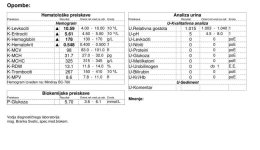
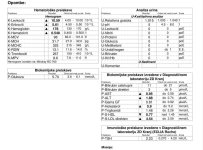
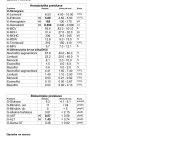
Your hemoglobin is sitting at 185 g/L, hematocrit at 55% and RBC at 5.89. That’s pretty high, mate. Your previous hematocrit was already around 54.8%, so we’re not looking at a single unusual reading.
With testosterone and NPP in the picture, this needs attention. I’d want you to have a repeat CBC, blood pressure assessment and medical review promptly. Once hematocrit gets above 54%, it becomes something that needs proper management rather than simply watching it.
Your cholesterol is another concern.
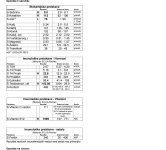
Total cholesterol at 5.9 mmol/L, HDL at 0.77 and LDL at 4.54.
That HDL is roughly 30 mg/dL and LDL around 176 mg/dL. Not a combination I like seeing in someone running anabolic compounds.
You can look fantastic physically and still have a cardiovascular risk profile that needs serious attention. Your physical condition tells us very little about what’s happening inside your arteries.
I’d repeat your lipid panel and include ApoB if possible. I’d also want to know your blood pressure.
Looking at your liver markers, AST and ALT were elevated on both reports, with ALT reaching 1.88 µkat/L.
You mentioned taking oral compounds when these tests were performed, so that could certainly be contributing. Heavy resistance training can also elevate these enzymes.
Still, I wouldn’t automatically assume that’s the explanation. Since you’ve stopped the orals, repeating AST, ALT, GGT, bilirubin and CK would help us understand whether things have normalized.
Your kidney markers also deserve a closer look.
Creatinine at 112 µmol/L and estimated GFR at 75.
Now, being a muscular athlete changes how I interpret creatinine. Muscle mass, intense training and creatine supplementation can all influence the result.
But I wouldn’t dismiss it either, particularly considering your hematocrit and cardiovascular markers.
I’d like to see cystatin C and urine albumin-to-creatinine ratio alongside repeat kidney function. Your urine test showing no protein is encouraging, although it doesn’t completely rule out early kidney issues.
Regarding glucose, your readings of 5.2 and 5.7 mmol/L aren’t particularly alarming on their own.
However, you’re considering 6 IU of HGH daily while already using insulin. HGH can reduce insulin sensitivity, so this is exactly where I’d want more information before making any decisions.
I’d like to see HbA1c (next bloodwork) and proper glucose monitoring data. A single fasting glucose measurement doesn’t tell us how well you’re managing glucose throughout the day.
And about the T3 you mentioned earlier…
Your TSH is around 2.07, free T3 is 5.16 and free T4 is slightly elevated at 22.6.
I see absolutely NO justification in those results for adding T3 to your bulk.
Excess thyroid hormone can increase energy expenditure and potentially muscle breakdown, while putting additional stress on your cardiovascular system. That’s the last thing I’d want considering your current bloodwork. (That is ANOTHER enemy for your bulk!)
Coming back to nutrition, there’s something else I’d change.
You’re eating approximately 350 g of protein at 85 kg body weight. That’s over 4 g per kilogram!
Mate, that’s an enormous amount of protein, and there’s very little evidence that pushing it that high provides additional hypertrophy benefits.
I’d rather see a more reasonable protein intake, sufficient fats and consistent carbohydrates, with calories adjusted according to your actual progress.
But before changing anything, I want to understand what you mean when you say your weight is stagnant.
Are we talking about two weeks without gaining weight? Two months? Longer?
Because if you’re genuinely consuming 4,800 calories consistently and your weight hasn’t moved for several weeks, I’d want to review how you’re tracking food, your activity levels and your actual weekly calorie average.
Remember that 4,800 calories on training days means very little if your weekly average is substantially lower.
I’d track morning body weight under consistent conditions and compare weekly averages. That’s how we establish whether you’re genuinely in a surplus.
And mate, one thing I really want you to understand…
You’ve been training for over ten years, so you’ve obviously accumulated plenty of experience and learned how your body responds to different approaches.
But experience doesn’t make us immune to the consequences of these compounds.
Right now, your bloodwork is telling us that some things need attention. Personally, I’d prioritize getting those markers assessed and improving your nutritional strategy before even considering additional HGH, insulin or thyroid hormones.
I’d also love to see some recent pictures of your current condition, preferably front, side and back, relaxed and under normal lighting.
What’s your approximate body fat percentage? How has your body weight changed over the last three months? And how much weight are you actually trying to gain?
Those details, together with your training performance and recovery, would help me understand where you’re currently standing and what needs to change.
Let’s get the fundamentals working properly first, brother. There’s plenty we can improve without making your protocol unnecessarily complicated.
Shark