✅ Reward point withdrawals are available again! You can now withdraw your points here.

Competitive bodybuilder – AAS use, hematocrit and medical monitoring

Back Competitive bodybuilder – AAS use, hematocrit and medical monitoring
Cycle planning, bloodwork, side effects, bulking and cutting, TRT and post-cycle therapy.

Marcopt

Beginner
Joined
Dec 22, 2025
Messages
10
Reaction score
0
Points
7.00
Hello, I am a 35-year-old competitive bodybuilder from Italy with previous experience using AAS.

I am considering a new competition preparation and I am looking for professional guidance focused on both performance and harm reduction.

My main concern is hematocrit. During a previous period of AAS use my hematocrit reached approximately 57%. Because of this elevated value, I underwent a therapeutic phlebotomy (bloodletting/salasso). I am therefore particularly concerned about managing this risk carefully during any future preparation.

I have recently completed a PCT and I have new bloodwork available, including testosterone, LH, FSH, estradiol, prolactin, kidney and liver function, glucose and lipid profile. I can attach the results if useful.

I am not looking for a generic recommendation. I would like to understand how an experienced specialist would approach someone with my history, which blood tests and cardiovascular parameters should be monitored, how frequently they should be checked, and what findings would require modifying or stopping an AAS-based preparation.

I am also interested in understanding whether your experts provide ongoing individualized supervision or only general advice.

Thank you.
 

Attachments

  • IMG_2015.jpeg
    IMG_2015.jpeg
    183.3 KB · Views: 7
Hi. Sorry I didn’t reply to you on Telegram. I got sick and took a few days off. Today is the first day I’ve started replying to messages. I’ll get to your message soon. We can continue here.
 
Hello, I am a 35-year-old competitive bodybuilder from Italy with previous experience using AAS.

I am considering a new competition preparation and I am looking for professional guidance focused on both performance and harm reduction.

My main concern is hematocrit. During a previous period of AAS use my hematocrit reached approximately 57%. Because of this elevated value, I underwent a therapeutic phlebotomy (bloodletting/salasso). I am therefore particularly concerned about managing this risk carefully during any future preparation.

I have recently completed a PCT and I have new bloodwork available, including testosterone, LH, FSH, estradiol, prolactin, kidney and liver function, glucose and lipid profile. I can attach the results if useful.

I am not looking for a generic recommendation. I would like to understand how an experienced specialist would approach someone with my history, which blood tests and cardiovascular parameters should be monitored, how frequently they should be checked, and what findings would require modifying or stopping an AAS-based preparation.

I am also interested in understanding whether your experts provide ongoing individualized supervision or only general advice.

Thank you.
Hi Marco!

This is actually the kind of case where I’d rather be conservative than clever.

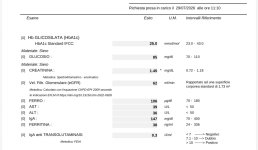
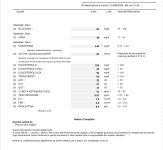
Your post-PCT hormonal recovery looks pretty decent: testosterone 5.57 ng/mL, LH 7.5, FSH 4.5 and prolactin 9.4. E2 at 41 wouldn’t worry me in isolation. Liver markers and the lipid panel also look quite reasonable.

The two things I would NOT brush aside are your previous 57% hematocrit and the current creatinine of 1.44 with calculated eGFR 62.

In a muscular competitive bodybuilder, creatinine-based eGFR can underestimate actual renal function because muscle mass, creatine intake, hydration and recent training all influence creatinine. So I’m not diagnosing kidney disease from this sheet. But with your history, I absolutely wouldn’t just say “bloodwork looks good, start prep”.

Before touching another AAS protocol I’d want a proper baseline: CBC with Hb/Hct/RBC and platelets, ferritin + iron studies, cystatin-C/eGFR, urine albumin/creatinine ratio, repeated creatinine well hydrated and away from hard training, ApoB, blood pressure tracked at home and ideally a proper cardiovascular assessment.

And importantly, I wouldn’t treat repeated phlebotomy as the strategy that makes a high-risk protocol acceptable. If hematocrit repeatedly climbs toward the high 50s, the first question should be what is driving it and what needs changing, including AAS exposure, hydration, smoking, altitude and possible sleep apnea.

You clearly take this seriously, which I appreciate. With your history I’d happily help you interpret and document the progression, but I’d build the health baseline first and the bodybuilding plan around it, not the other way around.

Post the complete CBC as well, especially Hb/Hct/RBC, and we can make much more sense of where you actually stand now.

Shark
 
These are the only exams I have
 

Attachments

  • IMG_2039.jpeg
    IMG_2039.jpeg
    104 KB · Views: 4
  • IMG_2040.jpeg
    IMG_2040.jpeg
    103.2 KB · Views: 3
These are the only exams I have
Thanks Marco, this helps.

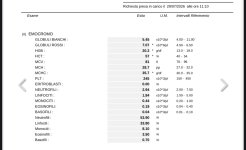
And yes, this confirms exactly why I’d be cautious. Your July CBC shows HCT 57%, Hb 20.3 g/dL and RBC 7.07. That is not a small deviation I’d simply manage around during prep, especially given that you already required therapeutic phlebotomy for the same problem.

Creatinine is also 1.45 with calculated eGFR 62. That may be distorted by muscle mass, training, creatine and hydration, but it deserves clarification before adding another physiological stressor.

The good part is glucose/HbA1c, liver enzymes and the rest shown here look quite reasonable. So I wouldn’t panic, but I also wouldn’t start another prep yet.

With your history, I’d first get a fresh CBC to see where Hb/Hct are now, plus cystatin C, urine ACR and repeat renal markers properly hydrated and away from hard training. Then we work from the current reality rather than trying to design a cycle around old numbers.

You’re a competitive bodybuilder, so the goal isn’t to tell you “never use AAS”. It’s to make sure we’re not ignoring a warning sign just because the rest of the sheet looks honestly good.

Shark
 
Back
Top