"No-carb (6.2g) Lifelong at age 51"

Back "No-carb (6.2g) Lifelong at age 51"
Share your cycle logs, progress, and experiences with the community.

Flagellum Dei

Newbie
Joined
Apr 28, 2026
Messages
9
Reaction score
2
Points
89.00

"No-carb (6.2g) 10-week test at age 51"
  • Age: 51
  • Starting weight: 96 kg
  • Height: 183 cm
  • Goal of the cycle: Lifelong, sustainable progress through gradual small steps while maintaining 8–10% body fat (lean condition).

PED Protocol​

  • Total duration: Lifelong
  • Compounds with dosages and frequency:
    • Testosterone Enanthate: 25 mg daily (evening)
    • Somatropin: 2 IU / 5 days ON, 2 days OFF (morning, fasted)
Supplements:
  • Morning:
    • Telmisartan 20 mg
    • Nattokinase 100 mg
    • Omega-3 (EPA/DHA 2000 mg)
    • Vitamin D3 + K2 (8000 IU)
    • Vitamin C 1500 mg
  • Midday:
    • Cialis 5 mg
  • Evening:
    • Magnesium bisglycinate 400 mg
    • NAC 600 mg
    • Red Rice Extract (1 capsule)

Daily Routine​

(Training days: Sunday, Monday, Thursday, Friday, Saturday – GH ON)
  • Fasted: 2 IU GH + 1 hour brisk walking
  • 08:30 – Breakfast:
    • 5 eggs (fried in butter or boiled) + a bit of butter
    • 150 g tuna
    • 100 g avocado + olive oil
  • 11:00 – 12:20 – TRAINING:
      • 20 min cardio (heart rate ~130 bpm)
  • During training:
    • At least 1.5 L water + a pinch of salt
  • 12:40 – Post-workout meal ("refill"):
    • 250 g beef (ground or steak) + plenty of salt
  • 15:30 – Lunch:
    • 300 g roasted chicken thigh
  • 19:00 – Dinner:
    • Training day: 200 g lean beef
    • Rest day: 500 ml egg white + 100 g spinach (spinach only on training days)

Weekend / Rest Days​

(Tuesday, Wednesday OFF – Saturday GH ON but rest)
  • Meat intake remains the same (700–800 g meat/fish per day)
  • Increase fats slightly (butter or egg yolks) to maintain energy without carbs
  • Goal: keep insulin near zero so the body aggressively burns remaining water and fat

Why This Works​

  1. No bloating:
    With 0 g carbs, insulin won’t cause subcutaneous water retention (even with GH).
  2. Constant fat burning:
    Without carbs, GH’s fat-burning effect works 24/7, not just during cardio.
  3. Muscle hardness:
    High red meat intake (creatine) + testosterone ensures dense, hard muscles without looking flat.

Important Note for Starting​

In the first 3–7 days, you may feel headaches or weakness. Don’t quit.
Drink plenty of water (5 L/day) and consume enough fats.
Once your liver switches to ketone production, your energy will surge.

Training Split​

  • Sunday: Back, rear delts, traps + 20 min cardio
  • Monday: Shoulders, triceps + 20 min cardio
  • Thursday: Legs, abs + 20 min cardio
  • Friday: Chest, biceps + 20 min cardio

Nutrition Summary​

FoodAmountCaloriesProteinFatCarbs
Ground beef (20%)250 g60542.5 g47.5 g0
Lean beef200 g24249 g6 g0
Eggs (5 pcs)300 g40038 g28 g3 g
Tuna (canned, brine)150 g17439 g1 g0
Chicken thigh (skinless)300 g36058 g12.3 g0
Avocado100 g1602 g14.7 g1.8 g
Spinach100 g232.9 g0.6 g1.4 g
TOTAL:
  • Calories: 1964 kcal
  • Protein: 231.4 g
  • Fat: 110.1 g
  • Carbohydrates: 6.2 g
 
Last edited:
My current diet was naturally preceded by 51 years of a classic high-carbohydrate diet, of which I spent 36 years training naturally, with even higher carbohydrate intake during bulking phases. However, I started noticing a number of uncomfortable and health-related issues (fatigue, falling asleep twice a day, bloated stomach that I couldn’t even pull in anymore, digestive problems, constant water retention, a continuous feeling of discomfort, excessive sweating, etc.). As it turned out, all of these were linked to carbohydrates, including the sugars found in dairy products.

(I would like to note here that this applies only to me and to those who recognize themselves in my story. I cannot recommend it to anyone else, because I have no idea how it would affect them.)

What happened when I started:

My weight was 96 kg on April 18, 2026. Now, on May 1, 2026, after 12 days, I am 90 kg. Naturally, my muscle mass can be maintained by the daily 25 mg of testosterone and GH (both Diadra products), while still allowing for some fat loss, supported by the morning GH use.

I would also like to mention that I don’t use this daily out of trend or fashion. I use it this way because smaller doses are easier to administer and can also be done subcutaneously (up to 0.3 ml). Personally, I inject into the shoulder (intramuscularly) using a 29G insulin needle, and after slight warming, the flow is perfect.

As I wrote in the title, I plan to follow this approach for the rest of my life, without taking anything away—only adding if necessary. The latter refers to performance enhancement.

On July 16, 2026, I will post before-and-after pictures, and after that, I will demonstrate within the same system how it is possible to bulk without carbohydrates.

If you have any questions, feel free to write, and I will try to answer everyone.

Postscript: After starting the zero-carbohydrate diet, as I mentioned, all of my problems disappeared within 12 days.
 
My current diet was naturally preceded by 51 years of a classic high-carbohydrate diet, of which I spent 36 years training naturally, with even higher carbohydrate intake during bulking phases. However, I started noticing a number of uncomfortable and health-related issues (fatigue, falling asleep twice a day, bloated stomach that I couldn’t even pull in anymore, digestive problems, constant water retention, a continuous feeling of discomfort, excessive sweating, etc.). As it turned out, all of these were linked to carbohydrates, including the sugars found in dairy products.

(I would like to note here that this applies only to me and to those who recognize themselves in my story. I cannot recommend it to anyone else, because I have no idea how it would affect them.)

What happened when I started:

My weight was 96 kg on April 18, 2026. Now, on May 1, 2026, after 12 days, I am 90 kg. Naturally, my muscle mass can be maintained by the daily 25 mg of testosterone and GH (both Diadra products), while still allowing for some fat loss, supported by the morning GH use.

I would also like to mention that I don’t use this daily out of trend or fashion. I use it this way because smaller doses are easier to administer and can also be done subcutaneously (up to 0.3 ml). Personally, I inject into the shoulder (intramuscularly) using a 29G insulin needle, and after slight warming, the flow is perfect.

As I wrote in the title, I plan to follow this approach for the rest of my life, without taking anything away—only adding if necessary. The latter refers to performance enhancement.

On July 16, 2026, I will post before-and-after pictures, and after that, I will demonstrate within the same system how it is possible to bulk without carbohydrates.

If you have any questions, feel free to write, and I will try to answer everyone.

Postscript: After starting the zero-carbohydrate diet, as I mentioned, all of my problems disappeared within 12 days.

Hard to give a proper opinion just from this

How do you actually look right now in terms of condition? body fat, muscle retention, overall fullness?
What does your training look like, frequency, intensity, progression?
How are you structuring your diet exactly, protein, fats, total calories, and consistency day to day?
Any bloodwork before and after the switch? lipids, glucose, thyroid?

And photos would help a lot here. It’s the easiest way to see what’s really happening beyond the scale.

With that info it’s much easier to understand if this approach is truly working long term or just an initial response.

Shark
 
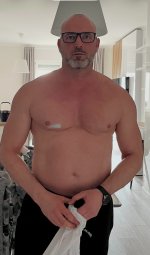
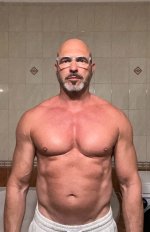
The first photo is from March 8, 2026, where I was still 96 kg. The second photo is from April 30, 2026, and there I’m already 90 kg. I originally planned to post the pictures on July 16, but I’ve decided to share them weekly so the progress up to that point can be followed as well.

It looks like I’m bigger in the second photo, even though I had already lost weight by then. Maybe it’s just me seeing it that way. What’s clear, though, is that the direction is good.

I have a lab appointment next week, so on the evening of May 8, 2026, I’ll be able to share the lab results with you too. I’ll write about my training in more detail in another post.
 

Attachments

  • IMG_1246.jpeg
    IMG_1246.jpeg
    250.8 KB · Views: 35
  • IMG_1247.jpeg
    IMG_1247.jpeg
    400.8 KB · Views: 35
Hey, first of all, it’s clear you actually think about your health and your life, and that you’re not just following trends I respect that. You can also clearly see that your training and overall approach are paying off, so you’re definitely moving in the right direction.
I do think there’s still some room for optimization, but it’s honestly difficult to say anything precise without seeing your bloodwork. That’s really the key factor before making any deeper adjustments.

From a purely personal point of view, I’d say your Vitamin D might be on the lower side I would probably run it a bit higher (8000Ius in cobination with K3 . And regarding HGH, I personally prefer running it daily and taking it before sleep rather than cycling it 5 days on 2 days off , but that’s just my own approach.
Apart from that, I’d wait for your blood results before changing too much.
 
My experience during the first two weeks completely without carbohydrates, supplemented with 25 mg of testosterone and 2 IU of GH in the morning:

In my protocol, I increased vitamin D to the level recommended by MLX (8000 IU in combination with K3).

The purpose of the morning GH, in my case, is fat loss. After administering it on an empty stomach, I start my one-hour morning walk about 30 minutes later, and I also complete my workout before noon.

During the day:
GH performs its fat-burning and anabolic functions, and by the afternoon its levels have fully declined.

Evening/Night:
Since the externally administered GH is no longer present in my bloodstream, the negative feedback (suppression of my natural production) ceases. When I fall asleep, my pituitary gland can freely release its own natural pulse of growth hormone.

Weight loss has stalled over the past few days, stabilizing between 90 and 91 kg; however, I am continuing to get leaner and stronger day by day. Due to the creatine and amino acids in the large amount of beef I consume, my strength is steadily increasing, while my insulin levels remain very low, allowing fat to burn efficiently.

My waist circumference has decreased by 5 cm, and my overall well-being is surprisingly good. I no longer experience strong carbohydrate cravings—my body is starting to adapt to my new diet, and I can feel that it responds well to it.
 
My experience during the first two weeks completely without carbohydrates, supplemented with 25 mg of testosterone and 2 IU of GH in the morning:

In my protocol, I increased vitamin D to the level recommended by MLX (8000 IU in combination with K3).

The purpose of the morning GH, in my case, is fat loss. After administering it on an empty stomach, I start my one-hour morning walk about 30 minutes later, and I also complete my workout before noon.

During the day:
GH performs its fat-burning and anabolic functions, and by the afternoon its levels have fully declined.

Evening/Night:
Since the externally administered GH is no longer present in my bloodstream, the negative feedback (suppression of my natural production) ceases. When I fall asleep, my pituitary gland can freely release its own natural pulse of growth hormone.

Weight loss has stalled over the past few days, stabilizing between 90 and 91 kg; however, I am continuing to get leaner and stronger day by day. Due to the creatine and amino acids in the large amount of beef I consume, my strength is steadily increasing, while my insulin levels remain very low, allowing fat to burn efficiently.

My waist circumference has decreased by 5 cm, and my overall well-being is surprisingly good. I no longer experience strong carbohydrate cravings—my body is starting to adapt to my new diet, and I can feel that it responds well to it.
Retatrutide could potentially help you as well
please let me know about your blood data
 
Could you elaborate on how it would help and how I could integrate it into the current system?
Retatrutide helps with fat loss by reducing appetite, slowing stomach emptying, improving insulin sensitivity, and increasing energy expenditure through its GLP-1, GIP, and glucagon receptor activity. 1mgEW
 
Retatrutide helps with fat loss by reducing appetite, slowing stomach emptying, improving insulin sensitivity, and increasing energy expenditure through its GLP-1, GIP, and glucagon receptor activity. 1mgEW
I may consider incorporating it into my next diet, but to provide meaningful and objective feedback, I first want to complete my current plan as designed to fully assess its effectiveness on its own. I also have a question regarding my winter bulking phase following the diet. Could you share your insights on compounds such as Ipamorelin and CJC-1295 (without DAC), and how they might be integrated into my current protocol (25 mg testosterone, 2 IU GH)
 
I may consider incorporating it into my next diet, but to provide meaningful and objective feedback, I first want to complete my current plan as designed to fully assess its effectiveness on its own. I also have a question regarding my winter bulking phase following the diet. Could you share your insights on compounds such as Ipamorelin and CJC-1295 (without DAC), and how they might be integrated into my current protocol (25 mg testosterone, 2 IU GH)
Yes, Ipamorelin and CJC-1295 without DAC are GH-releasing peptides. The problem without DAC is that CJC stays in the body only for a very short time, so you would need very precise timing and usually multiple injections per day.

Since you already use 2 IU GH daily, I personally do not see a huge benefit in adding them, because exogenous GH already suppresses part of your natural GH release through negative feedback.

Retatrutide is honestly really interesting though, especially for fat loss and appetite control. The mechanism behind it looks much more promising compared to adding more GH secretagogues on top of existing GH use.
 
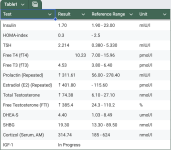
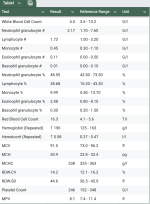
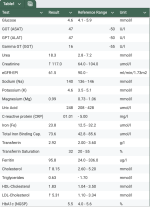
My lab results have mostly arrived. I still have to wait another week for the IGF-1 result, but even from these values it’s already clear that even this relatively low testosterone level puts a very heavy strain on my body. (I want to emphasize that this applies specifically to MY body and my individual response.)

On my doctor’s advice, immediate rest and therapeutic phlebotomy (venesection) are necessary as soon as possible. This will take place in two days at the hospital under medical supervision.

I immediately reduced the testosterone to a microdose of 12.5 mg/day and switched to subcutaneous injections. The GH remains at 2 IU/day.

My water intake will stay at 5–6 liters daily, lightly salted and supported with electrolytes. Until the blood draw, I will replace red meat with fish, but I will reintroduce red meat immediately afterward.

Beyond the testosterone overdose itself, my interpretation of the labs is the following:

If we look purely at my diet (Animal-Based / Carnivore) and the morning 2 IU growth hormone (GH), and completely strip away the distortions caused by testosterone, my bloodwork shows a very good metabolism and an overworked physique.

Here is the “clean” evaluation of the diet and GH side:
  1. My metabolism: Like a hybrid supercar (The success of the diet and GH)
Glucose (4.6 mmol/L) + Insulin (1.70 mIU/L) = HOMA-IR: 0.3!!!

This value is unbelievably good — almost hard to believe. One of the most common side effects of growth hormone (GH) is impaired insulin sensitivity and elevated blood glucose. The fact that my insulin is 1.70 and my HOMA-IR is 0.3 proves that the Animal-Based / zero-plant-carbohydrate diet completely neutralizes all harmful metabolic side effects of GH.

My cells are maximally insulin-sensitive. My body operates like a fat-burning machine, without unnecessary insulin spikes that would block lipolysis.
  1. Kidneys and musculature: At the edge of survival (The conflict between the diet and overtraining)
Urea (8.3 mmol/L) + Creatinine (117 µmol/L) + eGFR (61.5 mL/min)

This is the direct imprint of the diet and extreme activity level (18,000 steps + 1 hour of training + 20 minutes of cardio). The Carnivore diet elevates protein intake significantly, which raises urea levels.

However, the creatinine of 117 and eGFR of 61.5 indicate that my musculature is under continuous stress due to the calorie deficit and excessive activity, and my kidneys are struggling to filter the large amount of protein waste products.

The diet itself is good, but the activity level is currently too high for it. My body needs significantly more recovery at this stage.
  1. Electrolytes: Perfect balance (The success of salted hydration)
Sodium (140 mmol/L) + Potassium (4.6 mmol/L) + Magnesium (0.99 mmol/L)

This confirms that the daily 100 g spinach, 100 g avocado, and salted water protocol are working perfectly. Despite drinking 5–6 liters of water per day — which without electrolytes would completely flush the system — my mineral levels are flawless. Even the Telmisartan has not disrupted my potassium levels.
  1. Thyroid: Active fat-burning mode
TSH: 2.21 | fT3: 4.53 | fT4: 10.23

Many people fail on zero-carb diets because their thyroid function (especially fT3) slows down, causing fat loss to stall and fatigue to set in. In my case, my thyroid is functioning perfectly. This means that my diet (high fat and animal protein intake combined with avocado) provides enough metabolic security for my thyroid to maintain a high metabolic rate.

Summary (If we disregard the testosterone):

My diet and GH combination internally reflect a healthy body optimized for fat burning. The only structural issue is the disproportionate amount of physical activity, which is negatively affecting kidney markers (creatinine/urea).

If we remove the thickened blood caused by testosterone from the equation, then based on the diet and GH alone, the cycle itself appears manageable. However, the thick blood, testosterone overdose, and all the associated side effects significantly worsen the overall picture.

Right now, I am doing everything possible to stabilize the situation so I can continue the cycle safely. I will update again after the blood donation/phlebotomy.
 

Attachments

  • Képernyőfotó 2026-05-10 - 8.42.27.png
    Képernyőfotó 2026-05-10 - 8.42.27.png
    131.7 KB · Views: 17
  • Képernyőfotó 2026-05-10 - 8.45.28.png
    Képernyőfotó 2026-05-10 - 8.45.28.png
    200.6 KB · Views: 17
  • Képernyőfotó 2026-05-10 - 8.47.51.png
    Képernyőfotó 2026-05-10 - 8.47.51.png
    200.7 KB · Views: 17
My lab results have mostly arrived. I still have to wait another week for the IGF-1 result, but even from these values it’s already clear that even this relatively low testosterone level puts a very heavy strain on my body. (I want to emphasize that this applies specifically to MY body and my individual response.)

On my doctor’s advice, immediate rest and therapeutic phlebotomy (venesection) are necessary as soon as possible. This will take place in two days at the hospital under medical supervision.

I immediately reduced the testosterone to a microdose of 12.5 mg/day and switched to subcutaneous injections. The GH remains at 2 IU/day.

My water intake will stay at 5–6 liters daily, lightly salted and supported with electrolytes. Until the blood draw, I will replace red meat with fish, but I will reintroduce red meat immediately afterward.

Beyond the testosterone overdose itself, my interpretation of the labs is the following:

If we look purely at my diet (Animal-Based / Carnivore) and the morning 2 IU growth hormone (GH), and completely strip away the distortions caused by testosterone, my bloodwork shows a very good metabolism and an overworked physique.

Here is the “clean” evaluation of the diet and GH side:
  1. My metabolism: Like a hybrid supercar (The success of the diet and GH)
Glucose (4.6 mmol/L) + Insulin (1.70 mIU/L) = HOMA-IR: 0.3!!!

This value is unbelievably good — almost hard to believe. One of the most common side effects of growth hormone (GH) is impaired insulin sensitivity and elevated blood glucose. The fact that my insulin is 1.70 and my HOMA-IR is 0.3 proves that the Animal-Based / zero-plant-carbohydrate diet completely neutralizes all harmful metabolic side effects of GH.

My cells are maximally insulin-sensitive. My body operates like a fat-burning machine, without unnecessary insulin spikes that would block lipolysis.
  1. Kidneys and musculature: At the edge of survival (The conflict between the diet and overtraining)
Urea (8.3 mmol/L) + Creatinine (117 µmol/L) + eGFR (61.5 mL/min)

This is the direct imprint of the diet and extreme activity level (18,000 steps + 1 hour of training + 20 minutes of cardio). The Carnivore diet elevates protein intake significantly, which raises urea levels.

However, the creatinine of 117 and eGFR of 61.5 indicate that my musculature is under continuous stress due to the calorie deficit and excessive activity, and my kidneys are struggling to filter the large amount of protein waste products.

The diet itself is good, but the activity level is currently too high for it. My body needs significantly more recovery at this stage.
  1. Electrolytes: Perfect balance (The success of salted hydration)
Sodium (140 mmol/L) + Potassium (4.6 mmol/L) + Magnesium (0.99 mmol/L)

This confirms that the daily 100 g spinach, 100 g avocado, and salted water protocol are working perfectly. Despite drinking 5–6 liters of water per day — which without electrolytes would completely flush the system — my mineral levels are flawless. Even the Telmisartan has not disrupted my potassium levels.
  1. Thyroid: Active fat-burning mode
TSH: 2.21 | fT3: 4.53 | fT4: 10.23

Many people fail on zero-carb diets because their thyroid function (especially fT3) slows down, causing fat loss to stall and fatigue to set in. In my case, my thyroid is functioning perfectly. This means that my diet (high fat and animal protein intake combined with avocado) provides enough metabolic security for my thyroid to maintain a high metabolic rate.

Summary (If we disregard the testosterone):

My diet and GH combination internally reflect a healthy body optimized for fat burning. The only structural issue is the disproportionate amount of physical activity, which is negatively affecting kidney markers (creatinine/urea).

If we remove the thickened blood caused by testosterone from the equation, then based on the diet and GH alone, the cycle itself appears manageable. However, the thick blood, testosterone overdose, and all the associated side effects significantly worsen the overall picture.

Right now, I am doing everything possible to stabilize the situation so I can continue the cycle safely. I will update again after the blood donation/phlebotomy.
your blood looks more like 400mg Test per week and not 150mg how is your blood looking now after donating
 
Yes, it really does look like that although the 150 mg/week was actually 175 mg because it was 25x7, but that’s beside the point now. The main thing is that I’m extremely sensitive to hormones, which is also supported by the IGF-1 result that finally arrived (267). It also looks as if I’m not using 2 IU of GH, but more like 3–4 IU. This is another important warning for every PED user: it’s worth starting at the very bottom of the mg and IU ranges, because sometimes what seems like “very little” for others may already be too much for you.

There’s still no meaningful result yet from my bloodletting/phlebotomy because I fainted after only 250 ml was removed. So right now my hematocrit is probably still around 56.5–57. On the 26th they’ll try again and remove 450 ml, but considering everything, it will probably still take another 2–3 sessions to stabilize things. Since the procedures are repeated every two weeks, it could easily take another two months before I’m back to 100%. In the meantime, I’ll document exactly what I did during this period.

The most important thing is rest. Everyone will tell you to do cardio — don’t. Sweating thickens the blood even more. I’m staying home, resting, and only doing light walks with a maximum of 8,000 steps. I consume a lot of salt and drink a fixed 6 liters of water every day.

My New Diet During Rehabilitation​

(Until the Next Bloodletting Session)

The goal of this kidney-friendly and plasma-expanding diet is to minimize kidney waste burden, keep uric acid levels low, and replenish muscle glycogen stores (taking advantage of the 0.3 HOMA index).

Daily Macro Targets​

(7-Day Transition Period After Bloodletting)
  • Calories: ~2400–2500 kcal (safe, clean baseline)
  • Protein: Fixed at 140 g (strictly from easy-to-digest, low-purine sources, 1.5–1.6 g/kg bodyweight)
  • Carbohydrates: 220 g (clean, oxalate-free starches to reduce cortisol and protect muscle tissue)
  • Fat: 110 g (essential fatty acids and clean energy sources for vascular elasticity)

Exact Daily Schedule and Macro Breakdown​

06.00: 0,75L water, 2iu Gh and light walk 30-40min

1. Breakfast (08:00) – Hormonal and Circulatory Foundation​

Ingredients:
  • 4 whole eggs (XL)
  • 15 g quality butter (for cooking)
  • Half an avocado (~70 g)
Alongside:
  • 500 ml water
  • 1 g salt
  • Morning supplements: Nattokinase, NAC, Omega-3, B3, D3+K2, CoQ10 Ubiquinol, 21,5 mg Testosterone Enantathe subcutan
Macros:
~460 kcal | Protein: 28 g | Carbs: 4 g | Fat: 37 g

2. Mid-Morning (10:30) – Bulletproof Coffee​

Ingredients:
  • 1 serving black coffee
  • 15 g quality butter
  • A pinch of salt
  • Blended until creamy/emulsified
Macros:
~110 kcal | Protein: 0 g | Carbs: 0 g | Fat: 12 g

3. Lunch (13:00) – The Anabolic and Kidney-Protective Start​

Ingredients:
  • 200 g wild salmon fillet (cooked, heavily salted)
  • 130 g jasmine or basmati rice (measured raw weight, then cooked)
Alongside:
  • 750 ml water
  • 1.5 g salt
Macros:
~830 kcal | Protein: 46 g | Carbs: 100 g | Fat: 26 g

4. Afternoon Snack (16:00) – Maintaining Amino Acid Levels​

Ingredients:
  • 3 boiled eggs (heavily salted)
  • 1 serving homemade gelatin sweetened with stevia (to support oxygen and amino acid transport without oxalates)
Macros:
~260 kcal | Protein: 23 g | Carbs: 1 g | Fat: 18 g

5. Dinner (19:30) – Overnight Recovery and Fluid Regulation​

Ingredients:
  • 150 g wild salmon fillet
  • 250 g asparagus (steamed in butter, heavily salted)
Alongside:
  • 750 ml water
  • 1.5 g salt
  • Evening Telmisartan
  • Magnesium orotate
  • Nattokinase OR Aspirin Protect (not together)
  • Red rice extract
Macros:
~520 kcal | Protein: 38 g | Carbs: 10 g | Fat: 34 g

As you can see, carbohydrates have temporarily been reintroduced into my diet.

WHY?​

Before starting this project, there were three factors present at the same time that made a carb-free (or very low-carb) diet work perfectly without causing any issues:

1. I was consistently weight training (muscle preservation was guaranteed)​

Previously, I trained regularly and intensely. Weight training itself is the body’s primary anabolic (muscle-building) stimulus. When I was loading my muscles with heavy weights, my body received a very clear command:

“These muscles are essential for survival — do not break them down.”

While training, even without carbohydrates, my muscle mass remained protected. But now I’m under a strict training stop. That intense anabolic stimulus is gone, so without carbohydrates the body would immediately begin breaking down proteins and losing body mass.

2. My daily step count was very high (18,000 steps)​

My previous daily 18,000 steps represented a massive and continuous energy expenditure. In that state, my body was fully adapted to covering this huge movement demand through fats and ketones.

Now, however, I’m basically confined to couch rest (maximum 6,000–8,000 steps). My physical activity has dropped to a minimum, meaning my metabolism no longer needs to constantly run on fat-based energy.

At the same time, for basic cellular survival and for keeping cortisol (the stress hormone) low, clean glucose (white rice) is currently the fastest and safest tool.

3. The 190 hemoglobin and 61.5 eGFR [2.1] values were not yet known​

Previously, I wasn’t aware that my blood had become this thick or that my kidney filtration had dropped this much due to dehydration after training [2.1].

Without carbohydrates, the body produces more waste products during amino acid conversion. For a healthy kidney this usually isn’t a problem. But with my current temporarily impaired kidney function, the “clean fuel” provided by white rice — which burns down into carbon dioxide and water without nitrogen waste products — is the only thing that doesn’t place additional stress on my filtration system.

In Summary​

A carb-free diet worked extremely well in a body that was actively training, walking a lot, and properly hydrated.

But now the training stop, rapid weight loss, failed blood donation/phlebotomy, and temporary kidney stress have created a completely new emergency situation.

For this emergency situation, white rice is the solution — to protect my muscle mass and help dilute my blood until the next bloodletting session.
 
Last edited:
Back
Top