Most of what circulates about GLP-1 medications is either half right or a few years out of date.
GLP-1 (glucagon-like peptide-1) is a hormone your gut releases after you eat. It tells the pancreas to release insulin when blood sugar rises, tells the stomach to empty more slowly, and tells the brain that you have eaten enough [1]. Medications like semaglutide (Ozempic, Wegovy) and tirzepatide (Mounjaro, Zepbound) copy this signal, but they last for days instead of minutes. That is why one weekly injection can change appetite and blood sugar for the whole week.
Because these drugs became famous very quickly, many claims about them spread faster than the evidence. This article takes twelve common beliefs and checks each one against the large trials and the conclusions of the medicine regulators in Europe (EMA) and the US (FDA).
Key points
- GLP-1 drugs do more than reduce appetite. Semaglutide lowered heart attacks and strokes in people without diabetes.
- Most of the weight lost is fat, but lean mass is lost too.
- After stopping, people regained on average about two-thirds of the lost weight within a year.
- Large studies have not found a higher risk of thyroid cancer or suicidal thoughts.
- The drugs are not risk-free: stomach side effects are common, and gallbladder problems, pancreatitis and a rare eye condition are real risks.
- Unapproved and "research only" versions are not checked for quality by regulators.
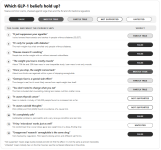
Shows: all twelve myths in one table, each with its verdict (False, Partly true, Mostly true, Not supported, Untested) shown as a labelled badge
Myths about how they work
Myth 1: "It just suppresses your appetite"
Verdict: Partly true
Reduced appetite is the main reason people lose weight on these drugs. But GLP-1 receptors are also found in the pancreas, the heart, blood vessels and the gut, so the drug acts in many places at once [1]. It raises insulin mainly when blood sugar is high and lowers glucagon (the hormone that pushes sugar out of the liver), which is why it also treats type 2 diabetes.
The clearest sign that it does more than reduce hunger comes from the SELECT trial. In 17,604 adults with overweight or obesity and existing heart disease, but no diabetes, semaglutide 2.4 mg lowered the combined rate of heart attack, stroke and cardiovascular death by about 20% (relative to placebo) over an average follow-up of 3.3 years [4]. A later analysis found that this benefit did not depend on how much weight people lost, and that only about a third of it could be explained by a smaller waist [5]. The rest is not yet fully understood.
Myth 2: "It's only for people with diabetes"
Verdict: False
Semaglutide and tirzepatide were first approved for type 2 diabetes, which is where this belief comes from. The main weight trials, STEP 1 for semaglutide and SURMOUNT-1 for tirzepatide, enrolled only people
without diabetes [2, 3]. In STEP 1, people lost an average of 14.9% of their body weight over 68 weeks, compared with 2.4% on placebo [2]. In SURMOUNT-1, the average loss at the highest dose was 20.9% over 72 weeks, compared with 3.1% on placebo [3]. Wegovy and Zepbound are the brand names approved for weight management. They contain the same active substances as Ozempic and Mounjaro, approved for a different use (and, for Wegovy, at a higher maximum dose).
Myth 3: "Nausea means it's working"
Verdict: False
Nausea is the most common side effect. In the STEP 1 to 3 trials, 43.9% of people on semaglutide had nausea at some point, compared with 16.1% on placebo, mostly during the weeks when the dose was being increased [6]. Slower stomach emptying is thought to be one of the reasons [1].
But nausea does not tell you how well the drug is working. A pooled analysis of those trials found that people with and without stomach side effects lost similar amounts of weight. Of the extra weight lost compared with placebo, less than 1 percentage point was explained by stomach side effects [6].
Myths about your body and results
Myth 4: "The weight you lose is mostly muscle"
Verdict: False, but lean mass loss is real
When you lose weight by any method, you lose some lean mass along with fat. Lean mass means everything that is not fat: muscle, but also organs, bone and water. In a SURMOUNT-1 substudy that measured body composition with DXA scans (a low-dose X-ray that separates fat from lean tissue), about 75% of the weight lost on tirzepatide was fat and about 25% was lean mass. The placebo group, which lost much less weight, showed the same proportions [7].
Results differ between studies. A 2024 review found lean mass shares ranging from about 15% or less to as much as 60% of total weight lost, depending on the population studied and the drug [8]. The same review points out that lean mass is not the same as muscle, and that MRI studies suggest muscle quality (for example, less fat stored inside muscle) may improve. It also notes that older adults and people at risk of sarcopenia (age-related muscle loss) are the groups where this matters most [8].
Resistance training and an appropriate diet are recommended alongside GLP-1 treatment to help preserve muscle and bone [9]. How much they reduce lean mass loss in people on these drugs has not been firmly measured yet.
Myth 5: "Once you stop, the weight comes back"
Verdict: Mostly true
Two trials tested this directly. In the STEP 1 extension, people stopped semaglutide (and the lifestyle programme) after 68 weeks. One year later they had regained about two-thirds of the weight they had lost, and most of the improvements in heart and metabolic markers went back towards where they started [10].
SURMOUNT-4 was even clearer. Everyone took tirzepatide for 36 weeks and lost an average of 20.9%. Then half were switched to placebo without knowing it. Over the next 52 weeks, body weight in the placebo group rose by 14.0%, while those who stayed on tirzepatide lost a further 5.5% [11].
Shows: average body weight change in SURMOUNT-4 at week 0, 36 and 88, for people who continued tirzepatide vs. those switched to placebo at week 36
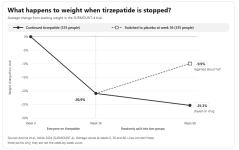
This is not a sign that the drug "failed". The most likely explanation is that the drug's effect on appetite lasts only while it is being taken. The trial authors concluded that obesity behaves like a long-term condition that needs ongoing treatment to keep the results [10]. Whether and how to stop, or to lower the dose, is a decision for a doctor, based on your health goals and how you respond.
Myth 6: "'Ozempic face' is a special side effect of the drug"
Verdict: Partly true
"Ozempic face" describes a face that looks thinner, older or looser after weight loss on a GLP-1 drug. The change itself is real, and plastic surgeons report more patients asking about it. But a 2026 review of the surgical literature concluded that it more plausibly reflects rapid or large weight loss than a proven drug-specific effect on the face [12]. In other words, the face loses fat along with the rest of the body, and a drug-specific effect on facial tissue has not been shown.
Myth 7: "You don't need to change what you eat"
Verdict: Partly true
The drug reduces appetite, so people on it eat less [1]. But the trials did not test the drug alone: in STEP 1 and SURMOUNT-1, everyone also received counselling on diet and physical activity [2, 3]. Eating less also means taking in fewer vitamins, minerals and protein. A 2025 joint advisory from four US nutrition and obesity societies lists nutrient deficiencies and muscle and bone loss as key challenges during GLP-1 treatment, and recommends nutrition support, an appropriate diet and resistance training [9]. What you eat matters more, not less, when you eat less of it.
Myths about safety
Myth 8: "It causes thyroid cancer"
Verdict: Not supported by human data so far
The concern comes from rodent studies. In mice and rats, semaglutide caused thyroid C-cell tumours (C-cells are a specific cell type in the thyroid), and the US label carries a boxed warning about this. The label states that it is unknown whether this applies to humans [13].
A large human study followed more than 145,000 people on GLP-1 drugs in Denmark, Norway and Sweden for an average of 3.9 years. It found no increased risk of thyroid cancer compared with people on another type of diabetes drug (hazard ratio 0.93). The results are compatible with, at most, a 31% higher relative risk [14]. For medullary thyroid cancer, the specific type linked to C-cells, there were too few cases to draw a firm conclusion.
The drugs are still not used by people with a personal or family history of medullary thyroid cancer, or with MEN2 (an inherited condition that causes this cancer). This is a contraindication on the label [13].
Myth 9: "It causes suicidal thoughts"
Verdict: Not supported by the evidence
In 2023, reports of suicidal thoughts in people taking GLP-1 drugs led to reviews in Europe and the US [15, 16]. In April 2024, the EMA's safety committee concluded that the available evidence does not support a causal link [15]. In January 2026, the FDA went further. A combined analysis of 91 placebo-controlled trials with about 108,000 people found no increased risk of suicidal thoughts or behaviour, or of depression or anxiety. The FDA asked manufacturers to remove the warning from the labels of Wegovy, Saxenda and Zepbound [16].
This does not mean mood changes on treatment should be ignored. The FDA advises telling your doctor about any new or worsening depression or unusual mood changes [16].
Myth 10: "It's completely safe" (or: "the rare risks are made up")
Verdict: False
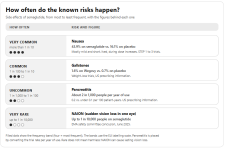
The drugs have a well-studied safety profile, but "well studied" is not the same as "risk-free". Stomach side effects (nausea, diarrhoea, vomiting, constipation) are very common [6]. Less common, but more serious:
- Gallbladder problems. Gallstones occurred in 1.6% of adults on Wegovy injections vs. 0.7% on placebo in the weight trials [13]. Rapid weight loss itself raises the risk of gallstones, but the label notes the risk was higher on Wegovy even after accounting for the amount of weight lost [13].
- Pancreatitis (inflammation of the pancreas). Confirmed in 0.2 per 100 patient-years on semaglutide vs. less than 0.1 on placebo [13]. The label lists persistent or severe belly pain, sometimes spreading to the back, as the warning sign [13].
- NAION (a sudden loss of blood flow to the optic nerve that can cause permanent vision loss in one eye). In June 2025 the EMA concluded this is a very rare side effect of semaglutide, affecting up to 1 in 10,000 users. People with sudden vision loss are advised to contact a doctor without delay [17].
Shows: how often each risk occurs (nausea, gallstones, pancreatitis, NAION) on a frequency ladder from very common to very rare, with the figures from the label, trials and EMA
Myths about doses and products
Myth 11: "A tiny 'microdose' gives the same result with fewer side effects"
Verdict: Untested
No randomised trial has tested "microdosing" GLP-1 drugs for weight loss, so there is no evidence that a very low dose gives the same results. The data that do exist point the other way. In a phase 2 dose-finding trial, lower daily doses of semaglutide produced less weight loss (6.0% at the lowest dose vs. 13.8% at the highest, after 52 weeks). Stomach side effects were dose-related in that trial, so a lower dose may cause fewer of them [18]. In a large health-record study, people who stayed on the lowest starting dose of semaglutide (0.25 mg weekly) for at least six months had lost about 2% of their body weight on average after 12 months. This is observational data, and the authors note it does not show whether people chose the low dose on purpose [19]. Whether a lower dose is the right choice for an individual is a decision made with a doctor.
Myth 12: "Unapproved or 'research' semaglutide is the same drug"
Verdict: False, as far as anyone can verify
A molecule with the same name is not automatically the same product. The FDA points out that unapproved versions of semaglutide and tirzepatide are not checked by regulators for safety, effectiveness or quality before they are sold [20]. It has documented:
- Dosing errors, some leading to hospital stays, when people measured doses themselves or when doses were miscalculated.
- "Research purposes only" products sold for human use, including semaglutide, tirzepatide and retatrutide, often with dosing instructions. The quality of these products is unknown.
None of this means every such product is contaminated or wrongly dosed. It means that no regulator has checked, and the trial results in this article were all obtained with the approved products.
References
- Drucker DJ. Mechanisms of action and therapeutic application of glucagon-like peptide-1. Cell Metab. 2018;27(4):740-756. PMID: 29617641 (https://pubmed.ncbi.nlm.nih.gov/29617641/)
- Wilding JPH, Batterham RL, Calanna S, et al. Once-weekly semaglutide in adults with overweight or obesity (STEP 1). N Engl J Med. 2021;384(11):989-1002. PMID: 33567185 (https://pubmed.ncbi.nlm.nih.gov/33567185/)
- Jastreboff AM, Aronne LJ, Ahmad NN, et al. Tirzepatide once weekly for the treatment of obesity (SURMOUNT-1). N Engl J Med. 2022;387(3):205-216. PMID: 35658024 (https://pubmed.ncbi.nlm.nih.gov/35658024/)
- Lincoff AM, Brown-Frandsen K, Colhoun HM, et al. Semaglutide and cardiovascular outcomes in obesity without diabetes (SELECT). N Engl J Med. 2023;389(24):2221-2232. PMID: 37952131 (https://pubmed.ncbi.nlm.nih.gov/37952131/)
- Deanfield J, Lincoff AM, Kahn SE, et al. Semaglutide and cardiovascular outcomes by baseline and changes in adiposity measurements: a prespecified analysis of the SELECT trial. Lancet. 2025;406(10516):2257-2268. PMID: 41138739 (https://pubmed.ncbi.nlm.nih.gov/41138739/)
- Wharton S, Calanna S, Davies M, et al. Gastrointestinal tolerability of once-weekly semaglutide 2.4 mg in adults with overweight or obesity, and the relationship between gastrointestinal adverse events and weight loss. Diabetes Obes Metab. 2022;24(1):94-105. PMID: 34514682 (https://pubmed.ncbi.nlm.nih.gov/34514682/)
- Look M, Dunn JP, Kushner RF, et al. Body composition changes during weight reduction with tirzepatide in the SURMOUNT-1 study of adults with obesity or overweight. Diabetes Obes Metab. 2025;27(5):2720-2729. PMID: 39996356 (https://pubmed.ncbi.nlm.nih.gov/39996356/)
- Neeland IJ, Linge J, Birkenfeld AL. Changes in lean body mass with glucagon-like peptide-1-based therapies and mitigation strategies. Diabetes Obes Metab. 2024;26 Suppl 4:16-27. PMID: 38937282 (https://pubmed.ncbi.nlm.nih.gov/38937282/)
- Mozaffarian D, Agarwal M, Aggarwal M, et al. Nutritional priorities to support GLP-1 therapy for obesity: a joint advisory from the American College of Lifestyle Medicine, the American Society for Nutrition, the Obesity Medicine Association, and The Obesity Society. Am J Clin Nutr. 2025;122(1):344-367. PMID: 40450457 (https://pubmed.ncbi.nlm.nih.gov/40450457/)
- Wilding JPH, Batterham RL, Davies M, et al. Weight regain and cardiometabolic effects after withdrawal of semaglutide: the STEP 1 trial extension. Diabetes Obes Metab. 2022;24(8):1553-1564. PMID: 35441470 (https://pubmed.ncbi.nlm.nih.gov/35441470/)
- Aronne LJ, Sattar N, Horn DB, et al. Continued treatment with tirzepatide for maintenance of weight reduction in adults with obesity: the SURMOUNT-4 randomized clinical trial. JAMA. 2024;331(1):38-48. PMID: 38078870 (https://pubmed.ncbi.nlm.nih.gov/38078870/)
- Ersan M, Özturhan O. Effects of GLP-1 receptor agonists on aesthetic surgery practice: a contemporary review. Turk J Surg. 2026 (online ahead of print). PMID: 42830623 (https://pubmed.ncbi.nlm.nih.gov/42830623/)
- US Food and Drug Administration. Wegovy (semaglutide) prescribing information. 2026. https://www.accessdata.fda.gov/drugsatfda_docs/label/2026/215256s029lbl.pdf
- Pasternak B, Wintzell V, Hviid A, et al. Glucagon-like peptide 1 receptor agonist use and risk of thyroid cancer: Scandinavian cohort study. BMJ. 2024;385:e078225. PMID: 38683947 (https://pubmed.ncbi.nlm.nih.gov/38683947/)
- European Medicines Agency. Meeting highlights from the Pharmacovigilance Risk Assessment Committee (PRAC), 8-11 April 2024. https://www.ema.europa.eu/en/news/m...isk-assessment-committee-prac-8-11-april-2024
- US Food and Drug Administration. FDA requests removal of suicidal behavior and ideation warning from glucagon-like peptide-1 receptor agonist (GLP-1 RA) medications. Drug Safety Communication, 13 January 2026. https://www.fda.gov/drugs/drug-safe...rning-glucagon-peptide-1-receptor-agonist-glp
- World Health Organization. The use of semaglutide medicines and risk of non-arteritic anterior ischemic optic neuropathy (NAION). June 2025 (reporting the EMA PRAC conclusion). https://www.who.int/news/item/27-06-2025-27-06-2025-semaglutide-medicines-naion
- O'Neil PM, Birkenfeld AL, McGowan B, et al. Efficacy and safety of semaglutide compared with liraglutide and placebo for weight loss in patients with obesity: a randomised, double-blind, placebo and active controlled, dose-ranging, phase 2 trial. Lancet. 2018;392(10148):637-649. PMID: 30122305 (https://pubmed.ncbi.nlm.nih.gov/30122305/)
- Murugadoss K, Venkatakrishnan AJ, Soundararajan V. Comparison of cardiometabolic benefits and tolerability in patients on sustained low doses of semaglutide or tirzepatide. Biol Methods Protoc. 2026;11(1):bpag048. PMID: 42857675 (https://pubmed.ncbi.nlm.nih.gov/42857675/)
- US Food and Drug Administration. FDA's concerns with unapproved GLP-1 drugs used for weight loss. https://www.fda.gov/drugs/postmarke...cerns-unapproved-glp-1-drugs-used-weight-loss