Most people start their peptide research backwards. They hear about a compound — BPC-157, semaglutide, ipamorelin — and then try to figure out what it does and whether it applies to them. This is like walking into a pharmacy and asking for "a medicine" without knowing what's wrong. The compound is the last decision, not the first.
The first question is:
what are you actually trying to accomplish? The second is:
what does your body currently look like on paper? Only after those two are answered does it make sense to pick a peptide. This article is the decision framework that connects your goal to the right compound class — and then helps you filter out compounds that don't belong in your specific context.
Peptides are not a single drug category. The term covers everything from synthetic fragments of gastric juice (BPC-157) to modified human hormones (semaglutide) to melanocortin system agonists (PT-141). They work through entirely different receptor systems, produce different timelines of effect, and carry different risk profiles. Choosing between them without understanding these distinctions is guesswork.
Quick-Reference Overview
| Compound | Primary goal | You will likely notice | Evidence level |
|---|
| Semaglutide | Fat loss / metabolic | Strong appetite reduction within days | FDA-approved (RCT-level) |
| Tirzepatide | Fat loss / metabolic | Strong appetite reduction, ~20% weight loss | FDA-approved (RCT-level) |
| Retatrutide | Fat loss / metabolic | Appetite suppression, GI side effects | Phase 2/3 trials |
| CJC-1295 + Ipamorelin | GH optimization / body comp / sleep | Improved sleep quality in ~1-2 weeks | Human clinical data |
| GHRP-2 | GH release / recovery | Mild hunger increase, deeper sleep | Human clinical data |
| GHRP-6 | GH release / appetite stimulation | Significant hunger spike within minutes | Human clinical data |
| Hexarelin | GH release (potent) | Flushing, GH-related water retention | Human data — ⚠ CV risk |
| IGF-1 LR3 | Localized muscle growth | Muscle pumps, hypoglycemia risk | Human data — cancer concern |
| BPC-157 | Tissue healing / gut repair | None (effects are structural) | Preclinical only |
| TB-500 | Systemic tissue repair | None (effects are structural) | Preclinical only |
| GHK-Cu | Skin / collagen / hair (topical) | None or subtle skin texture change | Preclinical only |
| SS-31 | Mitochondrial / cardiac support | None | Phase 2/3 (Barth syndrome) |
| Semax | Cognition / BDNF upregulation | Subtle clarity after days–weeks | Approved anxiolytic (Russia) |
| Selank | Anxiety reduction / cognitive | Subtle anxiolysis within hours | Approved anxiolytic (Russia) |
| PE-22-28 | Depression / anhedonia | Potentially subtle mood shift | Preclinical only |
| PT-141 | Sexual dysfunction / libido | Clearly felt — arousal onset ~45 min | FDA-approved (Vyleesi®) |
| HCG | Fertility / testicular function on TRT | Testicular fullness, maintained fertility | Well-characterized |
| Melanotan II | Tanning / libido | Tanning, nausea, erections — ⚠ CV flags | Human data — risk profile |
| Oxytocin | Social cognition / anxiety | Subtle or none | Human RCT data exists |
| MOTS-c | Metabolic / exercise performance | None (mitochondrial signaling) | Preclinical + early human |
| TAD-600 | Glutathione / antioxidant defense | None (systemic detox support) | Limited clinical data |
Step 1: What Is Your Goal?
There are six broad goal categories that cover the majority of peptide use cases. Most people fall into one primary category, sometimes with a secondary. The flowchart below maps each category to its compound class.
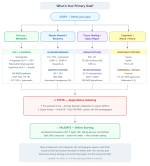
DIAGRAM: Goal-to-Category Decision Flowchart
Shows: Primary goal → compound class → specific compounds → risk filter → validation
Style: flowchart with four branching columns
The critical point: many compounds cross categories. GH secretagogues (CJC-1295, ipamorelin, GHRP-2) influence both body composition and recovery. Semaglutide is primarily metabolic but has emerging cardiovascular data. BPC-157 is categorized under healing but has preclinical data touching gut health, neuroprotection, and nitric oxide signaling. Your
primary goal determines your dosing strategy, monitoring targets, and timeline expectations — not the compound's theoretical range of effects.
Step 2: Match Goal to Compound Class
Fat Loss and Metabolic Regulation
This is the category with the strongest clinical evidence, period. GLP-1 receptor agonists (semaglutide, tirzepatide) and the emerging triple agonist retatrutide are the only
Peptides in any category backed by large-scale RCTs with hard endpoints.
What to expect
Appetite suppression is noticeable within the first 1–2 weeks. Weight loss averages 15–24% of body weight depending on compound and dose, sustained over 48–72 weeks in trial data. GI side effects (nausea, constipation, diarrhea) are common at dose escalation. You will feel this working — the appetite signal is unmistakable. Tirzepatide produces approximately 4.8 kg more weight loss than semaglutide at comparable timepoints in direct comparative meta-analyses.
The mechanism differs by receptor count. Semaglutide targets GLP-1 alone: it suppresses appetite via hypothalamic signaling, slows gastric emptying, and improves insulin sensitivity. Tirzepatide adds GIP receptor agonism, which enhances energy expenditure and adipocyte insulin sensitivity beyond what GLP-1 alone achieves. Retatrutide adds glucagon receptor agonism on top of both, driving hepatic lipid oxidation and thermogenesis — the phase 2 data showed ~24% body weight reduction, though phase 3 results are pending.
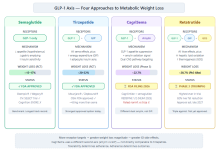
DIAGRAM: GLP-1 Agonist Comparison
Shows: Three-column comparison of receptor targets, mechanisms, weight loss data
Style: three-column comparison diagram
GH secretagogues (CJC-1295 + ipamorelin, GHRP-2) contribute to fat loss indirectly via elevated GH — growth hormone is lipolytic. But the magnitude is far smaller than GLP-1 agonists, and the timeline is months, not weeks. HGH Fragment 176-191 is a modified fragment of human growth hormone specifically isolated for its lipolytic domain, but the evidence base is thin compared to GLP-1 agonists.
Evidence tier: GLP-1 agonists have the strongest evidence of any compound on this list — multiple large RCTs, FDA approval, and the SELECT cardiovascular outcomes trial for semaglutide.
Muscle Growth and Recovery
GH secretagogues are the primary peptide class here. The validated combination is
CJC-1295 (no DAC) + ipamorelin: CJC-1295 is a GHRH analog that signals the pituitary to produce GH, while ipamorelin is a ghrelin mimetic (GHSR-1a agonist) that amplifies the signal through a separate receptor pathway. The combination produces additive GH release that exceeds either compound alone — this is mechanistically sound and well-documented.
What to expect
You will not wake up bigger. GH-mediated body composition changes are slow — 8–16 weeks minimum for measurable shifts in lean mass or fat distribution. What you
may notice earlier: improved sleep quality (GH pulses during deep sleep), slightly better recovery between training sessions, and subtle improvements in skin quality. Ipamorelin is notable for not stimulating ACTH or cortisol release, unlike GHRP-6 and GHRP-2 — this was specifically demonstrated in the original Raun et al. (1998) characterization paper.
GHRP-2 is more potent per-milligram than ipamorelin at stimulating GH release but also raises ACTH and cortisol — a trade-off.
GHRP-6 produces significant hunger via ghrelin receptor activation, which is either a feature (for hardgainers) or a bug (for anyone cutting).
Hexarelin is the most potent GHRP but carries a mechanistically inseparable cardiovascular risk via CD36 receptor activation (see Risk Modifiers below).
IGF-1 LR3 is a direct growth factor — it bypasses the pituitary entirely and acts on tissues directly. It produces localized muscle growth and carries a real hypoglycemia risk. It is also the compound with the most concerning cancer-risk profile due to its mechanism (sustained mitogenic signaling).
PEG-MGF (PEGylated mechano-growth factor) targets satellite cell activation in damaged muscle but has limited human data.
Evidence tier: CJC-1295 + ipamorelin combination has solid human pharmacokinetic data. IGF-1 LR3 has human data but significant safety concerns. PEG-MGF is largely preclinical.
Tissue Healing and Injury Repair
What to expect
You will not feel BPC-157 or TB-500 working. There is no subjective signal. These compounds operate at the level of angiogenesis (new blood vessel formation), fibroblast migration, and extracellular matrix remodeling. The only way to verify they're doing anything is objective measurement: imaging, range of motion testing, or functional capacity over time. Typical timelines cited in anecdotal reports are 2–6 weeks for soft tissue injuries.
BPC-157 (body protection compound) is a 15-amino-acid synthetic peptide derived from human gastric juice. Its mechanism centers on VEGFR2 upregulation (promoting new capillary formation at injury sites), fibroblast outgrowth acceleration, and NO pathway modulation. It also upregulates GH receptor expression in tendon tissue, potentially amplifying endogenous anabolic signaling locally. The evidence is consistently positive across a large number of animal models — but it is almost entirely preclinical. There are no published human RCTs.
TB-500 (a synthetic fragment of thymosin β4) works through a different mechanism: it promotes cell migration and systemic tissue remodeling rather than localized angiogenesis. The BPC-157 + TB-500 combination is the most widely used healing stack because the mechanisms are genuinely complementary — local repair (BPC) plus systemic cell migration (TB-500).
GHK-Cu is best understood as a topical agent targeting collagen synthesis, skin remodeling, and hair follicle support. It operates through a different pathway than BPC-157 or TB-500 and is orthogonal — not redundant — when stacked with either.
SS-31 (elamipretide) targets mitochondrial cardiolipin, stabilizing the inner mitochondrial membrane. It's relevant for tissue repair in the context of mitochondrial dysfunction — particularly cardiac tissue. It has phase 2/3 data in Barth syndrome and is being investigated for heart failure.
Evidence tier: BPC-157 and TB-500 are preclinical only. GHK-Cu has in vitro and limited in vivo data. SS-31 has genuine clinical trial data but for specific indications.
Cognition, Mood, and Neuroprotection
What to expect
Nootropic
Peptides produce effects that range from subtle to imperceptible. Semax, the most studied, upregulates BDNF (brain-derived neurotrophic factor) in the hippocampus — a 1.4-fold increase in BDNF protein and a 3-fold increase in exon III BDNF mRNA, demonstrated in rat models. But you will not
feel BDNF increasing. What users sometimes report is improved verbal fluency, slightly faster information processing, and better sustained attention — usually after 5–14 days. Selank's anxiolytic effects are generally more noticeable, manifesting as reduced background anxiety within hours to days.
Semax is an ACTH(4-10) analog, completely devoid of hormonal activity, that modulates BDNF/TrkB signaling and activates dopaminergic and serotonergic systems. It is an approved medication in Russia for stroke recovery and cognitive disorders. The mechanism is primarily neurotrophic — it supports structural neuroplasticity rather than acute neurotransmitter manipulation.
Selank is a synthetic analog of tuftsin (an endogenous immunomodulatory peptide). Its anxiolytic mechanism involves GABAergic modulation, and it also has documented effects on IL-6 and enkephalin expression. It is approved in Russia as an anxiolytic.
PE-22-28 is the least-characterized compound in this category. It derives from the pro-melanin-concentrating hormone system and has preclinical data suggesting antidepressant-like effects, potentially relevant for anhedonia and treatment-resistant depression. The evidence is limited.
Oxytocin has human RCT data across social cognition, anxiety, and addiction contexts, but the effects are subtle and highly context-dependent. It is not a straightforward anxiolytic.
Evidence tier: Semax and Selank are approved medications (Russia) with published clinical and preclinical data. PE-22-28 is preclinical only. Oxytocin has human RCT data but in narrow contexts.
Sexual Dysfunction and Libido
PT-141 (bremelanotide) is FDA-approved (Vyleesi®) for hypoactive sexual desire disorder in premenopausal women. It acts on the melanocortin-4 receptor (MC4R) in the central nervous system — this is a neural pathway, not a vascular one (unlike PDE5 inhibitors). Onset is approximately 45 minutes. Side effects include nausea and transient blood pressure changes.
Melanotan II is a non-selective melanocortin agonist — it hits MC1R (tanning), MC3R/MC4R (sexual arousal, appetite), and MC5R. It reliably produces tanning and libido effects, but its non-selectivity means it also carries cardiovascular flags (blood pressure effects) and is associated with nevi changes. The risk profile is higher than PT-141.
Evidence tier: PT-141 is FDA-approved. Melanotan II has human data but significant safety concerns and no regulatory approval.
Hormonal Support (TRT / AAS Context)
HCG (human chorionic gonadotropin) is the standard compound for maintaining testicular function and fertility during TRT or AAS use. It mimics LH signaling and maintains intratesticular testosterone production.
HMG (human menopausal gonadotropin) provides both LH and FSH activity and is used in fertility recovery protocols.
TAD-600 (glutathione precursor) and
NAD+ / NMN are support compounds for oxidative stress management — relevant during AAS use when hepatic and cardiovascular strain is elevated. They don't directly affect hormonal axes but serve a protective role.
Evidence tier: HCG is well-characterized and widely used in clinical endocrinology. TAD-600 and NAD+ have limited clinical data in the specific context of AAS support.
Step 3: Check the Evidence
Not all peptides are equal in evidence quality. The matrix below maps every compound against every major goal category, showing where the human data actually exists versus where you're relying on animal models.
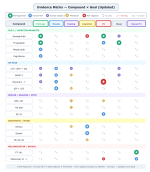
DIAGRAM: Evidence Matrix
Shows: Compounds (rows) × Goals (columns) with evidence tier indicators
Style: evidence matrix with circles (human) and diamonds (preclinical)
The pattern is clear: GLP-1 agonists and PT-141 sit in a different evidence universe than BPC-157 and TB-500. This doesn't mean preclinical compounds are useless — it means you should calibrate your expectations and recognize that you're operating with less certainty.
Step 4: Filter by Your Health Context
Your pre-existing health conditions don't just change doses — they change which compounds are appropriate at all. This is the step most people skip.
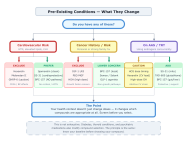
DIAGRAM: Risk Modifier Decision Tree
Shows: Pre-existing conditions → compounds to exclude vs. prefer
Style: flowchart with three condition branches
Key interactions worth internalizing:
Cardiovascular risk (hypertension, dyslipidemia, elevated hematocrit, LVH) eliminates hexarelin entirely. Hexarelin's CD36 receptor activation causes coronary vasoconstriction that is dose-independent and mechanistically inseparable from its cardioprotective PPARγ signaling — you cannot get one without the other. GHRP-6 raises cortisol and ACTH, which is an added cardiovascular stressor. Ipamorelin does neither.
Cancer history makes IGF-1 LR3 and PEG-MGF poor choices — sustained mitogenic signaling through IGF-1R is a known tumor-promotion pathway. Even GH secretagogues warrant caution in this context, though the indirect and pulsatile nature of GH release from secretagogues carries lower theoretical risk than exogenous IGF-1.
Concurrent AAS use shifts the calculus toward protective compounds: SS-31 for mitochondrial/cardiac support, TAD-600/glutathione for oxidative stress management, BPC-157 for liver and gut protection. It also makes careful monitoring non-optional — the cardiovascular load from androgens plus GH-axis stimulation is additive.
Step 5: Understand Stacking Logic
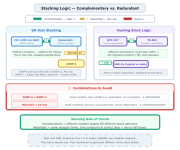
DIAGRAM: Stacking Logic
Shows: Complementary vs redundant vs contraindicated compound combinations
Style: dual-section diagram with labeled connections
The rule is simple:
complementary stacking targets different receptor systems or tissue pathways. Redundant stacking hits the same receptor with two compounds. One well-dosed compound through the right receptor is better than two half-dosed compounds competing for the same binding site.
Validated complementary stacks:
- CJC-1295 (no DAC) + ipamorelin: GHRH + GHSR-1a = additive GH release
- BPC-157 + TB-500: local angiogenesis + systemic cell migration
- GLP-1 agonist + GH secretagogue: metabolic + body composition (different axes entirely)
Redundant combinations to avoid:
- GHRP-6 + GHRP-2 + ipamorelin: all three hit GHSR-1a. Pick one.
- CJC-1295 no DAC + CJC-1295 with DAC: same receptor, different half-lives. Choose based on desired pharmacokinetics, not "more is better."
Step 6: What You Won't Feel — and What to Actually Measure
The compound map below positions each peptide on two axes that matter to the user: how strong the evidence is, and whether you'll have any subjective sense that the compound is doing something.
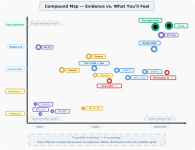
DIAGRAM: Compound Map
Shows: Scatter-style positioning on Evidence Strength (Y) vs User Noticeability (X)
Style: compound map / scatter diagram
The lower-left quadrant — weak evidence and silent effects — is where the most uncertainty lives. BPC-157 and TB-500 are there. They may work, and the preclinical data is consistently positive, but you are combining limited evidence with no subjective feedback signal. Bloodwork and objective measurement are the only way to assess.
| Compound | Felt effect | Timeline | What to actually track |
|---|
| Semaglutide / Tirzepatide | Strong appetite suppression | Days | Weight, HbA1c, lipids, fasting glucose |
| CJC-1295 + Ipamorelin | Better sleep, subtle | 1–2 weeks (sleep); 8–16 weeks (body comp) | IGF-1, body composition (DEXA), sleep quality |
| BPC-157 | None | N/A | Imaging, ROM, functional testing |
| TB-500 | None | N/A | Same as BPC-157 |
| GHK-Cu | Subtle skin texture | Weeks–months | Visual, skin elasticity |
| Semax | Subtle cognitive clarity | 5–14 days | Cognitive testing if rigorous; otherwise subjective |
| Selank | Mild anxiolysis | Hours–days | Subjective anxiety levels |
| PT-141 | Clearly felt arousal | ~45 min | Subjective |
| Hexarelin | Flushing, water retention | Minutes–hours | IGF-1, echocardiogram (if CV concern) |
| IGF-1 LR3 | Pumps, potential hypo | Hours | Blood glucose, IGF-1 |
Core monitoring toolkit (regardless of compound): baseline CBC, comprehensive metabolic panel, fasting glucose, lipid panel, IGF-1, liver enzymes, kidney function. Add echocardiography if using compounds with cardiovascular flags. Recheck at 6–8 weeks.
References
- Raun K, Hansen BS, Johansen NL, et al. Ipamorelin, the first selective growth hormone secretagogue. Eur J Endocrinol. 1998;139(5):552-561. PMID: 9849822
— Establishes ipamorelin's selectivity: GH release without ACTH or cortisol stimulation, unlike GHRP-6 and GHRP-2.
- Wen J, Syed B, Nadora D, et al. Tirzepatide versus semaglutide on weight loss in type 2 diabetes patients: a systematic review and meta-analysis of direct comparative studies. Endocrinol Diabetes Metab. 2025;8(3):e70045.
— Meta-analysis of 4 studies (28,827 patients): mean difference of −4.84 kg favoring tirzepatide over semaglutide.
- Lazutkaite G, et al. Efficacy of tirzepatide, retatrutide, and semaglutide for weight loss in obese individuals without diabetes. PubMed. 2025. PMID: 40583149
— Comparative review of GLP-1, dual, and triple agonists for weight loss.
- Glazova NY, Merchieva SA, Volodina MA, et al. Semax, an analog of ACTH(4-10) with cognitive effects, regulates BDNF and trkB expression in the rat hippocampus. Brain Res Bull. 2005;68(1-2):54-58. PMID: 16325006
— Demonstrates 1.4-fold increase in BDNF protein and 3-fold increase in exon III BDNF mRNA after single Semax application.
- Shadrina M, Kolomin T, Agapova T, et al. Comparison of the temporary dynamics of NGF and BDNF gene expression in rat hippocampus, frontal cortex, and retina under Semax action. J Mol Neurosci. 2010;41(1):30-35. PMID: 19662538
— Time-course analysis of neurotrophin gene expression changes following Semax administration.
- Dolotov OV, Karpenko EA, Inozemtseva LS, et al. Semax, an analogue of adrenocorticotropin (4-10), binds specifically and increases levels of brain-derived neurotrophic factor protein in rat basal forebrain. J Neurochem. 2006;97 Suppl 1:82-86. PMID: 16635254
— Establishes specific binding sites for Semax and BDNF protein increase in basal forebrain upon intranasal application.
- Eremin KO, Kudrin VS, Saransaari P, et al. Semax, an ACTH(4-10) analogue with nootropic properties, activates dopaminergic and serotoninergic brain systems in rodents. Neurochem Res. 2005;30(12):1493-1500. PMID: 16362768
— Shows Semax enhances striatal serotonin turnover and potentiates amphetamine-induced dopamine release.
- Chang CH, Tsai WC, Lin MS, Hsu YH, Pang JH. The promoting effect of pentadecapeptide BPC 157 on tendon healing involves tendon outgrowth, cell survival, and cell migration. J Appl Physiol. 2011;110(3):774-780. PMID: 21030672
— BPC-157 accelerates tendon healing via fibroblast outgrowth and survival mechanisms.