Most side effects of GLP-1 medications (semaglutide, tirzepatide and the investigational retatrutide) affect the digestive system. They are common, usually mild to moderate, and tend to peak when the dose is raised. A few are rare but serious and need prompt attention. This article explains what to expect, how side effects relate to dose and titration, how to reduce them, and which warning signs should never be ignored.
This article covers semaglutide, tirzepatide and retatrutide. Other GLP-1 drugs, such as liraglutide, are not covered. Retatrutide is investigational and not approved.
Note: This article summarizes published research and product information. It is not medical advice. Do not change your dose or stop treatment on your own; discuss it with your prescriber.
Overview
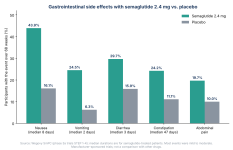
| Side effect | Semaglutide 2.4 mg (vs placebo)² | Tirzepatide 5–15 mg (vs placebo)³ | Usual pattern |
|---|
| Nausea | 43.9% (16.1%) | 24.6–33.3% (9.5%) | Mainly during dose escalation |
| Vomiting | 24.5% (6.3%) | "Very common" (label) | Mainly during escalation |
| Diarrhea | 29.7% (15.9%) | 18.7–23.0% (7.3%) | Short-lived |
| Constipation | 24.2% (11.1%) | "Very common" (label) | Can last longer |
| Gallstones | 1.6% (1.1%) | Acute gallbladder disease 2.0% (1.6%) | Linked to weight loss |
Figures come from the product labels (68-week semaglutide trials; tirzepatide trial in people without diabetes) and are not head-to-head comparisons.
1. Why Side Effects Happen, and Why Dose Matters
GLP-1 medications slow stomach emptying and act on appetite centers in the brain. Both effects help weight loss, and both can cause fullness, nausea and bowel changes. The labels state that these reactions are mainly seen during dose escalation.²˒³
The data support a clear dose and titration link:
- Semaglutide: The label advises escalating over 16 weeks to reduce the likelihood of gastrointestinal symptoms. With significant symptoms, delaying escalation or returning to the previous dose is an option.²
- Tirzepatide: Gastrointestinal events increased with dose (nausea 24.6%, 33.3% and 31.0% at 5, 10 and 15 mg, versus 9.5% on placebo), and nausea, vomiting and diarrhea decreased over time.³
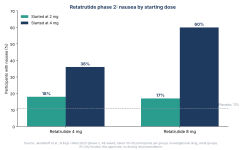
- Retatrutide: In its phase 2 trial, nausea at the 8 mg dose was 60% with a 4 mg starting dose but 17% with a 2 mg start. At 4 mg it was 36% versus 18%.⁴ The authors concluded that a lower starting dose partially mitigated these events.⁴
Two reassuring points come from the semaglutide trials. Gastrointestinal events were 99.5% non-serious and 98.1% mild to moderate, and permanent discontinuation because of them was 4.3%.¹ In addition, weight loss was largely independent of these events: fewer than 1 percentage point of the extra weight loss was explained by them.¹ In other words, you do not need to feel sick for the medication to work.
Evidence tier: Randomized trials and product labels, all manufacturer-sponsored.
2. What Titration Looks Like
The labels set the escalation steps. Semaglutide starts at 0.25 mg weekly for 4 weeks, then 0.5 mg, 1 mg and 1.7 mg (four weeks each) before reaching the 2.4 mg maintenance dose after 16 weeks.² Tirzepatide starts at 2.5 mg, rises to 5 mg after 4 weeks, and then goes up in 2.5 mg steps after at least 4 weeks on each dose.³ These steps exist mainly to limit side effects, so skipping or compressing them is the opposite of what the data support. If a step is not tolerated, the labels and the expert consensus both describe slowing down rather than pushing through.²˒⁶
3. Nausea and Vomiting
Nausea is the most common side effect. With semaglutide, median duration was 8 days and vomiting 2 days in the trials.² Some people notice it after each dose increase.
What may help, according to an expert consensus (funded by Novo Nordisk): start low and go slow, extend the escalation by 2 to 4 weeks at the previous dose if needed, and eat small amounts in more frequent meals when vomiting occurs. Hydration is "particularly important." If measures fail, a physician may consider antiemetic medication, a lower dose or a temporary pause.⁶ A dose reduction can be considered if antiemetics are needed for more than a month at a maintenance dose.⁶
Seek medical advice if vomiting persists, you cannot keep fluids down, or you feel dizzy or confused. Persistent vomiting also raises the risk of thiamine (vitamin B1) deficiency, which in rare cases can cause a serious brain condition; one review advises treating suspected deficiency without waiting for lab confirmation.¹⁰
4. Diarrhea
Diarrhea affects roughly 30% of people on semaglutide 2.4 mg and 19% to 23% on tirzepatide in the trials.²˒³ With semaglutide, the median duration was 3 days.² The priority is fluid replacement. The expert consensus says that persistent diarrhea may be treated with antidiarrheal medication such as loperamide, and that people taking metformin may need a lower metformin dose.⁶ Ask your physician before using such medicines.
Ongoing diarrhea can also drain potassium, magnesium and sodium (see the article on micronutrient gaps).
5. Constipation
Constipation is as common as nausea but lasts longer: the median duration with semaglutide was 47 days.² Because people often drink less when they feel full, constipation can worsen.⁶ The consensus suggests more water, more fiber, more movement and, if needed, a stool softener, and a dose reduction if it worsens.⁶
Seek medical advice for constipation with a swollen abdomen, vomiting or severe pain. Intestinal obstruction has been reported after marketing of semaglutide.²
6. Reflux, Indigestion and Bloating
Dyspepsia, reflux (gastroesophageal reflux disease), belching, flatulence and abdominal distension are listed as common reactions for both drugs, mainly during escalation.²˒³ The expert consensus gives no dedicated management plan for reflux, though it cites a study in people with chronic gastritis or reflux in which the drug was tolerated without dose adjustment.⁶ Smaller meals and leaving a gap between the last meal and lying down are common-sense measures, not trial-proven ones.
7. Delayed Gastric Emptying
Slower stomach emptying is the mechanism behind many of these effects. It also matters before procedures. Both labels note that cases of pulmonary aspiration have been reported in patients on GLP-1 drugs under general anesthesia or deep sedation, because food may remain in the stomach despite fasting.²˒³
A 2025 multisociety guidance (gastroenterology, bariatric surgery and anesthesia societies)
addresses this. It describes itself as guidance, not an evidence-based guideline, because little evidence exists.⁸ Its main points:
- Decisions are made jointly by you, the procedural team and the prescriber.
- Risk of delayed emptying is considered higher in the escalation phase, at higher doses, with weekly formulations, with symptoms such as nausea, vomiting, abdominal pain or constipation, and with other conditions that slow the gut, such as gastroparesis.
- Without elevated risk, therapy may be continued. With elevated risk, options include a liquid diet for at least 24 hours, a bedside stomach ultrasound on the day, or a modified anesthesia technique (rapid sequence induction).
- If holding the drug is chosen, the optimal duration is unknown. The guidance points to the earlier anesthesiology advice of holding weekly formulations a week before the procedure.
- It notes that it may need revision for dual and triple agonists.⁸
Tell your anesthesia and surgical team that you take a GLP-1 drug. Do not stop it on your own before a procedure.
Delayed gastric emptying as a reported reaction is listed as uncommon on both labels. People with gastroparesis may have more severe gastrointestinal effects with semaglutide.²
8. Dehydration and Fatigue
Vomiting, diarrhea and low fluid intake can cause dehydration, which in rare cases can worsen kidney function. Both labels warn about this, and the semaglutide label notes more gastrointestinal effects in moderate renal impairment.²˒³ One review suggests aiming for more than 2 to 3 liters of fluid per day for most people.⁹
Fatigue is listed among commonly reported reactions.²˒³ Likely contributors include low calorie intake, dehydration, poor sleep and nutrient gaps, but trials do not establish which dominates in individual people. Fatigue that persists beyond the escalation phase is worth checking with blood tests (see the micronutrient article).
9. Gallbladder Problems and Pancreatitis
Rapid weight loss itself raises the risk of gallstones. The data fit this pattern:
- Labels: With semaglutide, cholelithiasis was 1.6% (placebo 1.1%) and cholecystitis 0.6% (0.3%).² With tirzepatide in weight management trials, acute gallbladder disease was 2.0% versus 1.6%, and cholecystitis 0.6% versus 0.2%. Events were positively associated with weight reduction.³
- Meta-analysis: A meta-analysis of 76 randomized trials (103,371 participants, mostly with type 2 diabetes) found a 37% higher relative risk of gallbladder or biliary disease (RR 1.37). The risk was higher with higher doses (RR 1.56), longer use (RR 1.40) and in weight-loss trials (RR 2.29).⁷
- Caveats. The meta-analysis searched trials up to mid-2021, so it does not cover tirzepatide or retatrutide. For individual drugs, the increase was clear for liraglutide (RR 1.79) but not statistically significant for subcutaneous semaglutide (RR 1.28). Only 20 of the 76 trials reported biliary events, so underreporting is possible. The dose and duration findings were stated inconsistently in the summary page I read, so treat them as tentative.⁷
Acute pancreatitis is uncommon: 0.2% with semaglutide versus under 0.1% on placebo in phase 3a trials, with no excess in the large SELECT trial.² If pancreatitis is suspected, both labels say to stop the drug, and not to restart it if confirmed.²˒³
Observational signals
A 2023 claims-data study compared GLP-1 users for weight loss with users of bupropion-naltrexone. It found higher hazard ratios for pancreatitis (9.09), bowel obstruction (4.22) and gastroparesis (3.67), but not for biliary disease (1.50, not significant).¹¹ The confidence intervals were very wide (for pancreatitis 1.25 to 66.0) because events were few: 4,144 of the 4,757 GLP-1 users took liraglutide, only 613 took semaglutide, and no semaglutide user had a bowel obstruction. The data are diagnosis codes without body weight, so this is a signal, not a rate.¹¹ I found no comparable data for tirzepatide or retatrutide.
10. Other Effects Worth Knowing
- Low blood sugar. This applies mainly to people with type 2 diabetes. In a tirzepatide weight-management trial in diabetes, hypoglycemia occurred in 10.3% of those also taking a sulfonylurea versus 2.1% of those who were not.³ If you take insulin or a sulfonylurea, your physician may need to adjust it.³
- Hair loss. Reported in 2.5% on semaglutide versus 1.0% on placebo, mostly mild, and more often with weight loss of 20% or more.²
- Heart rate. A mean increase of about 3 beats per minute with semaglutide² and 3 to 5 with tirzepatide.³
- Injection-site reactions are listed as common and are usually minor.²˒³
11. Warning Signs
| Sign | Possible cause | Action |
|---|
| Severe, persistent abdominal pain, with or without vomiting | Pancreatitis² | Seek urgent care; stop the drug until assessed |
| Pain in the upper right abdomen, fever or yellow skin | Gallbladder disease | Urgent assessment |
| Vomiting that does not stop, cannot drink, dizziness | Dehydration, kidney strain, thiamine deficiency²˒¹⁰ | Urgent assessment |
| Confusion, unsteady walking, vision changes | Thiamine deficiency (rare)¹⁰ | Emergency |
| Swollen abdomen with severe constipation or vomiting | Obstruction (rare)² | Urgent assessment |
| Sudden vision loss | Optic nerve problem reported with semaglutide² | Urgent assessment |
| Swelling of face or throat, rash | Allergic reaction (rare)²˒³ | Emergency |
12. Prevention and Management: A Practical Summary
- Follow the titration schedule. Do not skip steps or speed up. Ask your prescriber about staying longer on a dose if symptoms are significant; the semaglutide label supports delaying escalation or returning to the previous dose.²
- Eat small, slow meals, stop when full, and be careful with fatty meals.
- Drink regularly, even when not thirsty.
- Keep fiber and movement up to counter constipation.
- Do not self-treat with anti-nausea, antidiarrheal or laxative drugs without checking interactions.
- Keep a simple symptom log (day after injection, meals, fluids). This is general advice, not a trial-tested method, but it helps your prescriber see whether symptoms follow dose increases.
- Report persistent symptoms early. The goal of the expert consensus is to keep severity and duration low, which may help people stay on treatment.⁶
13. Semaglutide, Tirzepatide and Retatrutide
Semaglutide and tirzepatide have broadly similar gastrointestinal profiles, with a clear dose relationship for tirzepatide.³ Retatrutide is not approved. In phase 2, treatment discontinuation due to adverse events was 6% to 16% (0% on placebo), mostly gastrointestinal and during escalation. Skin hypersensitivity events (dysesthesia) were reported in about 7%, and heart rate rose in a dose-dependent manner until week 24, then declined.⁴ Later trade press coverage of manufacturer topline phase 3 data mentions discontinuation rates up to 11.3% at the highest dose; these figures are not yet peer-reviewed.⁵
14. Who May Be More Affected
The sources point to a few groups that need extra care:
- Moderate kidney impairment: more gastrointestinal effects, and a higher risk from dehydration.²
- Gastroparesis (already slow stomach emptying): more serious or severe gastrointestinal effects with semaglutide.²
- Previous pancreatitis: the labels advise caution, and tirzepatide has not been studied in this group.²˒³ Observational data also suggest a signal for pancreatitis and bowel obstruction.¹¹
- Gallstones or gallbladder disease: the expert consensus advises caution; ursodeoxycholic acid may be used in people with a history of gallstones.⁶
- Insulin or sulfonylurea use: higher risk of low blood sugar.³
- Higher doses and the escalation phase: more nausea, vomiting and diarrhea.³˒⁴
15. If Side Effects Do Not Settle
Side effects usually ease with time. In the tirzepatide trials, nausea, vomiting and diarrhea decreased over time,³ and the semaglutide events were described as mostly transient.¹ If they do not, the options discussed in the sources are:
- Staying longer on the current dose, or returning to the previous one for a while.²˒⁶
- Setting a maintenance dose below the maximum when tolerability is limited. The tirzepatide label lists 5, 10 and 15 mg as maintenance doses.³ The consensus also mentions a maintenance dose below the label maximum.⁶
- Pausing treatment until symptoms resolve and then resuming, as the consensus suggests.⁶
- Treating a specific symptom (for example diarrhea or constipation) alongside the medication.⁶
I did not find trial data that tell you how long to wait, how low to go, or whether a given pause is safe for you. Those decisions belong with your prescriber. Avoid inventing your own scheme, such as splitting doses or stretching injection intervals.
16. What the Evidence Does Not Show
- No head-to-head comparison of side effects between the drugs.
- Most trials were short and sponsored by the manufacturer.
- Practical tips (small meals, loperamide, antiemetics) rest on expert opinion, not randomized trials.
- The gallbladder meta-analysis mostly included people with type 2 diabetes and predates tirzepatide and retatrutide;⁷ the claims study mostly covered liraglutide.¹¹
Summary
- Most side effects are digestive, mild to moderate and linked to dose escalation.
- A slower titration, small meals and fluids are the main tools.
- Persistent vomiting, severe abdominal pain, confusion or vision changes need urgent care.
References
- Wharton S, Calanna S, Davies M, et al. Gastrointestinal tolerability of once-weekly semaglutide 2.4 mg in adults with overweight or obesity. Diabetes Obes Metab. 2022;24(1):94-105. DOI: 10.1111/dom.14551. Pooled STEP 1–3 (and STEP 4) analysis. STEP trials sponsored by Novo Nordisk; abstract only.
- Wegovy (semaglutide), Summary of Product Characteristics. European Medicines Agency, sections 4.2, 4.4, 4.8. No DOI. Holder: Novo Nordisk.
- Mounjaro (tirzepatide), Summary of Product Characteristics. European Medicines Agency, sections 4.2, 4.4, 4.8. No DOI. Holder: Eli Lilly.
- Jastreboff AM, Kaplan LM, Frías JP, et al. Triple-hormone-receptor agonist retatrutide for obesity: a phase 2 trial. N Engl J Med. 2023;389:514-526. DOI: 10.1056/NEJMoa2301972. Eli Lilly-funded; full text read.
- Pharmacy Times. What pharmacists need to know about retatrutide's TRIUMPH-1 phase 3 results. June 3, 2026. No DOI. Trade press on manufacturer topline results; not peer-reviewed.
- Gorgojo-Martínez JJ, Mezquita-Raya P, Carretero-Gómez J, et al. Clinical recommendations to manage gastrointestinal adverse events in patients treated with GLP-1 receptor agonists: a multidisciplinary expert consensus. J Clin Med. 2023;12(1):145. DOI: 10.3390/jcm12010145. Expert opinion; funded by Novo Nordisk.
- He L, Wang J, Ping F, et al. Association of glucagon-like peptide-1 receptor agonist use with risk of gallbladder and biliary diseases: a systematic review and meta-analysis of randomized clinical trials. JAMA Intern Med. 2022;182(5):513-519. DOI: 10.1001/jamainternmed.2022.0338. Read via the journal page summary, not the full text. Publicly funded (Chinese research foundations); no conflicts reported.
- Kindel TL, Wang AY, Wadhwa A, et al. Multisociety clinical practice guidance for the safe use of glucagon-like peptide-1 receptor agonists in the perioperative period. Clin Gastroenterol Hepatol. 2025;23:2083-2085. DOI: 10.1016/j.cgh.2024.10.003. Full text read. Consensus guidance; some authors report consulting for Novo Nordisk.
- Almandoz JP, Wadden TA, Tewksbury C, et al. Nutritional considerations with antiobesity medications. Obesity. 2024;32(9):1613-1631. DOI: 10.1002/oby.24067. Eli Lilly-funded; summary page only.
- Urbina J, Salinas-Ruiz LE, Valenciano C, Clapp B. Micronutrient and nutritional deficiencies associated with GLP-1 receptor agonist therapy: a narrative review. Clin Obes. 2026;16:e70070. DOI: 10.1111/cob.70070. No external funding.
- Sodhi M, Rezaeianzadeh R, Kezouh A, Etminan M. Risk of gastrointestinal adverse events associated with glucagon-like peptide-1 receptor agonists for weight loss. JAMA. 2023;330(18):1795-1797. DOI: 10.1001/jama.2023.19574. Research letter, full text read; claims data; internal university funds. Mostly liraglutide users.