Performance fatigue is not the same as being tired.
A person who trains hard, eats correctly, and sleeps eight hours can still experience a progressive decline in output that doesn't respond to rest. This is structural fatigue — the body's recovery systems themselves are rate-limited.
In PED users, this problem has specific, predictable causes:
- GH axis suppression from chronic exogenous hormone use
- tissue repair bottlenecks from training volume that outpaces connective tissue adaptation
- the hormonal withdrawal of PCT that strips away the anabolic environment the body had adapted to.
Part 1 covered the cellular and neurological foundations of fatigue.
This part covers the recovery architecture: the GH/IGF-1 axis, tissue repair compounds, hormonal recovery support, and the metabolic fatigue that accompanies body recomposition.
Quick-Reference Overview
| Compound | Primary fatigue target | You will likely notice | Evidence level |
|---|
| Ipamorelin | GH pulsatility restoration | Improved sleep quality within 1–2 weeks | Some human data |
| CJC-1295 (no DAC) | Sustained GHRH signaling | Deeper sleep, gradual recovery improvement | Limited human data |
| CJC-1295 (with DAC) | Extended GH elevation | Similar to no-DAC, more sustained | Limited human data |
| GHRP-2 | Potent GH release | Hunger increase, improved sleep | Some human data |
| GHRP-6 | GH release + appetite | Strong hunger, improved sleep | Some human data |
| Hexarelin | Potent GH release (non-selective) | Improved recovery; CV risk in at-risk users | Some human data |
| Somatropin (exogenous GH) | Direct GH replacement | Improved recovery, body composition, sleep | RCT-level (clinical) |
| IGF-1 LR3 | Direct IGF-1 pathway activation | Possibly faster muscle recovery | Preclinical + limited clinical |
| PEG-MGF | Muscle satellite cell activation | None acutely | Preclinical only |
| TB-500 | Systemic tissue repair | Reduced joint stiffness over weeks | Preclinical only |
| GHK-Cu | Tissue remodeling + antioxidant | Improved skin/wound healing | Some human data (topical) |
| HCG | LH mimetic / testicular recovery | Improved mood and energy during PCT | Clinical use established |
| HMG | FSH + LH activity | Fertility recovery | Clinical use established |
| Tirzepatide | Metabolic fatigue in overweight users | Reduced appetite, weight loss, energy shift | Phase 3 RCT (strong) |
| Semaglutide | Same as tirzepatide | Same pattern | Phase 3 RCT (strong) |
Why PED Users Experience Specific Fatigue Patterns
Before the compounds, a brief orientation on why fatigue in PED users is mechanistically distinct from general fatigue.
On-cycle fatigue can stem from: hepatic stress (oral AAS depleting glutathione and liver function), cardiovascular strain (elevated hematocrit reducing oxygen delivery efficiency, LVH reducing cardiac output per beat), disrupted sleep architecture (certain compounds like trenbolone directly impair REM sleep), and gut damage (oral AAS and NSAIDs compromising nutrient absorption).
Post-cycle fatigue is driven by: suppressed endogenous testosterone (the pituitary-gonadal axis takes weeks to months to recover), crashed estrogen if an aromatase inhibitor was overdosed, depleted GH pulsatility from prolonged exogenous GH use, and the psychological withdrawal of losing the anabolic support that enabled high-volume training.
Caloric deficit fatigue during cutting phases involves: reduced leptin signaling to the hypothalamus (downregulating thyroid output and GH secretion), increased cortisol from metabolic stress, and progressive loss of glycogen reserves that makes every session feel harder than the same work at maintenance calories.
Understanding which pattern you're in determines which compounds are relevant.
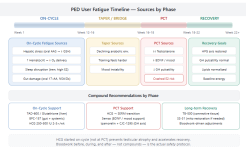
[DIAGRAM: ped-fatigue-timeline.svg Shows: Timeline from on-cycle → PCT → recovery with fatigue sources mapped to each phase Style: horizontal timeline with annotations]
The GH/IGF-1 Axis — The Slow Infrastructure Play
Growth hormone doesn't fight fatigue directly. It orchestrates the recovery processes that determine whether you can sustain training volume across weeks and months. GH pulses during deep sleep trigger hepatic IGF-1 production, which drives protein synthesis, connective tissue repair, and satellite cell activation. When GH pulsatility is suppressed — by aging, chronic stress, caloric deficit, or feedback from exogenous GH use — recovery slows and fatigue accumulates.
How GH secretagogues work — the two-signal model
The pituitary releases GH in response to two converging signals:
- GHRH (Growth Hormone-Releasing Hormone) — the "go" signal. Tells somatotroph cells to synthesize and release GH.
- Ghrelin receptor (GHSR-1a) activation — the amplifier. GHRPs and ghrelin mimic this signal, potentiating the GH pulse beyond what GHRH alone achieves.
Somatostatin acts as the brake — it inhibits GH release in a pulsatile pattern, creating the characteristic GH pulse-and-trough cycle. Effective GH restoration means amplifying the pulse without overriding the trough (which is why continuous GH elevation from exogenous somatropin is pharmacologically different from secretagogue-driven pulsatile release).
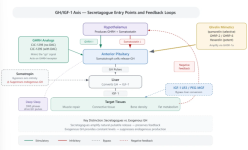
[DIAGRAM: gh-axis-pathway.svg Shows: GHRH + GHSR-1a → Pituitary → GH pulse → Liver → IGF-1 → target tissues, with somatostatin brake and feedback loops Style: flowchart with feedback arrows]
Ipamorelin — the clean baseline
What to expect
Improved sleep quality (deeper, more consolidated) is the most commonly reported effect, typically noticeable within 1–2 weeks. Recovery between sessions may improve gradually. No hunger increase. No cortisol or prolactin elevation. This is the GH secretagogue with the fewest off-target effects, which makes it the default starting point. Relevant for: anyone wanting to restore GH pulsatility without metabolic side effects.
Ipamorelin is a pentapeptide (Aib-His-D-2-Nal-D-Phe-Lys-NH₂) that activates GHSR-1a with potency comparable to GHRP-6 but with a selectivity profile that is pharmacologically distinct. In conscious swine, ipamorelin released GH with an ED₅₀ of 2.3 nmol/kg — similar to GHRP-6 — but did not elevate ACTH, cortisol, prolactin, FSH, LH, or TSH. This selectivity is ipamorelin's defining feature: it triggers GH release without the hormonal noise that other GHRPs produce.
The fatigue relevance is primarily through sleep. GHRH activity promotes slow-wave sleep (SWS) — the sleep stage where the majority of restorative GH pulses occur. By amplifying GH secretion via the ghrelin receptor, ipamorelin enhances SWS depth, improving recovery quality even when total sleep duration is unchanged.
Evidence tier: Human pharmacokinetic data; selectivity profile established in multiple species; clinical use in combination protocols.
CJC-1295 — the sustained signal
What to expect
CJC-1295 is typically paired with ipamorelin rather than used alone. The combination provides both sustained GHRH signaling (CJC-1295) and acute GH pulse amplification (ipamorelin). Effects similar to ipamorelin but with a longer pharmacodynamic window.
No-DAC version has a half-life of ~30 minutes and produces discrete pulses.
With-DAC version binds albumin and has a half-life of 6–8 days, producing more sustained GH elevation — which may blunt pulsatility.
CJC-1295 is a synthetic GHRH analog — a modified version of the first 29 amino acids of native GHRH with substitutions that resist enzymatic degradation. The no-DAC variant (also called mod-GRF 1-29) produces pulsatile GH release that more closely mimics physiology. The DAC variant binds serum albumin, extending its half-life dramatically but producing a more sustained, less pulsatile GH elevation.
For fatigue purposes, the no-DAC version is generally preferred because physiological GH pulsatility — not just GH level — matters for recovery. The pulse-and-trough pattern allows receptor resensitization between pulses and drives the SWS-associated GH surges that are most important for tissue repair.
Evidence tier: Limited human pharmacokinetic data; widely used clinically in combination protocols.
GHRP-2 and GHRP-6 — more potent, less selective
What to expect
Both produce stronger GH pulses than ipamorelin, but with metabolic side effects.
GHRP-6 causes significant appetite increase (via ghrelin receptor activation in the hypothalamus) — useful during a bulk, counterproductive during a cut.
GHRP-2 is slightly more potent with less hunger but still elevates cortisol and prolactin modestly. Improved sleep quality with both. Relevant for: users who need more aggressive GH output and can tolerate or want the appetite stimulation.
Both GHRP-2 and GHRP-6 activate GHSR-1a but lack ipamorelin's selectivity. GHRP-2 shows higher potency (lower ED₅₀) but at the cost of measurable cortisol and ACTH elevation. GHRP-6 produces the strongest hunger response of any GH secretagogue — which is a feature, not a bug, for someone trying to eat enough during a mass phase or recovering from appetite suppression (common on semaglutide or tirzepatide).
The cortisol elevation from GHRP-2/6 is modest and transient, but in a user who is already cortisol-elevated (chronic stress, caloric deficit, overtraining), stacking additional cortisol output is counterproductive to the fatigue-recovery goal.
Evidence tier: Human pharmacological data; selectivity profiles well-characterized.
Hexarelin — the context-dependent compound
What to expect
The most potent GH secretagogue available, but with a significant caveat. Hexarelin activates both GHSR-1a (GH release) and
CD36 (a scavenger receptor involved in fatty acid uptake). The CD36 activation is dual-edged: it drives PPARγ-mediated cardioprotection in healthy vasculature, but also causes coronary vasoconstriction. In a healthy user, the net cardiovascular effect may be neutral or mildly positive. In a user with pre-existing cardiovascular risk factors — which includes most AAS users with elevated LDL, hematocrit, or LVH — the vasoconstriction risk is real, dose-independent, and mechanistically inseparable from the GH release.
Hexarelin produces GH responses 2-3× greater than ipamorelin at equivalent doses, but the CD36 interaction makes it a fundamentally different risk proposition. It also shows receptor desensitization faster than other GHRPs — GH response diminishes after 4–8 weeks of continuous use, requiring cycling or breaks.
For PED users
If you have documented cardiovascular risk markers (elevated LDL, hematocrit >50%, blood pressure >140/90, or any echocardiographic findings), hexarelin is a poor choice regardless of its GH potency. Ipamorelin + CJC-1295 achieves adequate GH restoration without the CD36 liability.
Evidence tier: Human pharmacological data; cardiovascular mechanism well-characterized; desensitization documented.
Somatropin (Exogenous GH) — the direct replacement
What to expect
Improved body composition (particularly visceral fat reduction), better recovery, improved sleep, and over months improved skin and connective tissue quality. Also: water retention, potential carpal tunnel symptoms, and at higher doses, insulin resistance and potential acromegalic features. This is not a peptide secretagogue — it is the hormone itself.
Exogenous GH bypasses the entire secretagogue pathway and directly provides the hormone. It's the strongest intervention for GH-mediated fatigue, but it's also the one with the most metabolic consequences. Supraphysiological doses suppress endogenous GH production via negative feedback, and chronic use can cause insulin resistance (GH is a counter-regulatory hormone to insulin).
For fatigue specifically, low-dose GH (1–2 IU/day) is primarily a recovery and sleep quality tool. Higher doses (4+ IU/day) enter body composition territory with proportionally more side effects.
Evidence tier: Multiple RCTs; established clinical use for GH deficiency; well-characterized dose-response curve.
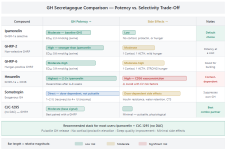
[DIAGRAM: gh-secretagogue-comparison.svg Shows: Comparison of GH secretagogues on axes of potency vs selectivity, with side-effect annotations Style: horizontal bar chart with dual bars per compound]
Tissue Repair — Fixing What Training Breaks
TB-500 — the systemic repair signal
What to expect
Reduced joint stiffness and improved soft tissue resilience over 2–4 weeks. The effect is not immediate and not always perceptible — TB-500 works by improving the
quality of tissue repair (less fibrotic scarring, better collagen organization) rather than the speed. If you have a chronic nagging injury that never fully resolves, TB-500 addresses the repair quality problem. Stack with BPC-157 for complementary mechanisms.
TB-500 is a synthetic version of thymosin β4 (Tβ4), a 43-amino-acid protein involved in actin sequestration and cell migration. When tissue is injured, Tβ4 is upregulated and acts as a chemoattractant for myoblasts — drawing muscle satellite cells to the injury site. It also promotes angiogenesis, reduces fibrosis, and modulates inflammation toward a resolution phenotype rather than chronic smoldering.
In rodent skeletal muscle injury models, Tβ4 administration accelerated muscle fiber regeneration, increased satellite cell proliferation, and reduced fibrotic scarring. In tendon injury models, TB-500-treated subjects showed improved tendon strength and collagen type I organization.
The fatigue relevance: Much of what PED users experience as "fatigue" is actually accumulated micro-damage to connective tissue — tendons, ligaments, and fascia that adapt more slowly than muscle. Training volume that muscle can handle may exceed what connective tissue can repair between sessions. TB-500 addresses this rate-limiting step.
Evidence tier: Preclinical only (no human RCTs); extensive animal model data across tissue types.
GHK-Cu — the tissue remodeler
What to expect
Primarily studied topically (wound healing, skin quality). Systemic use for fatigue is speculative. GHK-Cu activates matrix metalloproteinases (MMPs) that remodel damaged extracellular matrix, upregulates collagen and decorin synthesis, and has demonstrated antioxidant activity via SOD and glutathione upregulation. The connection to fatigue is indirect: better tissue remodeling → fewer chronic micro-injuries → less accumulated structural fatigue.
GHK-Cu (glycyl-L-histidyl-L-lysine copper complex) is a naturally occurring tripeptide-copper complex found in human plasma. Its concentration declines with age. The fatigue case is weaker than for TB-500 — the evidence is stronger for dermal and wound healing than for systemic musculoskeletal recovery. Include it in a stack when tissue quality (not just tissue repair speed) is the bottleneck.
Evidence tier: Human data for topical/dermal applications; preclinical for systemic effects; peptide bank inclusion for completeness.
Hormonal Recovery — Post-Cycle Fatigue
HCG — restoring testicular function
What to expect
During PCT: improved mood, energy, and libido within 1–2 weeks, driven by direct LH-mimetic stimulation of Leydig cells. HCG maintains or restores testicular volume and testosterone production when endogenous LH is suppressed (which it is on any AAS cycle). It does not restore pituitary LH production — it bypasses it. This is bridge therapy, not axis recovery.
HCG (human chorionic gonadotropin) is not a peptide in the synthesized-research-compound sense — it's a glycoprotein hormone with direct clinical use. Its inclusion here is because post-cycle fatigue is one of the most common fatigue presentations in the PED-using population, and HCG is the primary pharmacological tool for managing it.
The mechanism is straightforward: HCG mimics LH at the Leydig cell receptor, stimulating testosterone synthesis directly. This maintains intratesticular testosterone (ITT) — which is critical not just for testosterone production but for spermatogenesis and testicular tissue health.
Practical note: HCG used on-cycle (250–500 IU 2–3×/week) prevents testicular atrophy and makes PCT faster and less symptomatic than waiting until after the cycle to begin recovery. Starting HCG only at PCT is playing catch-up.
Evidence tier: Clinical use established; well-characterized mechanism; standard of care in fertility medicine.
HMG — when fertility matters
What to expect
HMG (human menopausal gonadotropin) provides both FSH and LH activity. Where HCG only provides LH mimicry, HMG adds FSH stimulation — which is required for spermatogenesis. If fertility preservation is a goal (and for a 21-year-old on AAS, it should be considered), HMG addresses the FSH gap that HCG alone leaves. Fatigue benefit is secondary to the hormonal normalization it supports.
Evidence tier: Clinical use established; standard fertility medicine protocol.
Metabolic Fatigue — When Body Composition Is the Problem
Tirzepatide and Semaglutide — the GLP-1 pathway
What to expect
Weight loss, reduced appetite, and for many users, an improvement in baseline energy that correlates with metabolic normalization rather than any stimulatory effect. The fatigue benefit is indirect: excess adiposity drives chronic low-grade inflammation (via adipokine signaling), insulin resistance (which impairs glucose utilization in muscle), and sleep-disordered breathing. Resolving these removes a fatigue source. These compounds do not improve energy in lean users — they address the metabolic dysfunction that excess body fat creates.
Tirzepatide (dual GIP/GLP-1 receptor agonist) and semaglutide (GLP-1 receptor agonist) are included here because metabolic fatigue in overweight PED users is common and often misattributed to other causes. A user running testosterone with a BMI of 30+ and chronically elevated fasting insulin may blame their fatigue on "bad sleep" or "overtraining" when the primary driver is metabolic dysfunction that no peptide targeting GH or mitochondria will fix.
The PED-specific context
These compounds cause significant appetite suppression, which can conflict with mass-building goals. They are tools for recomposition phases, not bulk phases. The appetite suppression from semaglutide can also mask the hunger-driven recovery eating that hard training requires, so caloric tracking becomes mandatory rather than optional.
Evidence tier: Phase 3 RCTs (strongest evidence of any compound in this article); FDA-approved for obesity and type 2 diabetes.
What You Won't Feel — and What to Actually Measure
| Compound | Felt effect | Timeline | What to actually track |
|---|
| Ipamorelin | Improved sleep quality | 1–2 weeks | Sleep stage data, subjective recovery |
| CJC-1295 | Similar to ipamorelin | 1–2 weeks | IGF-1 levels (4 weeks), sleep quality |
| GHRP-2/6 | Hunger increase, improved sleep | Days | IGF-1, appetite logs, sleep data |
| Hexarelin | Strong recovery improvement | Days–weeks | IGF-1, blood pressure, lipid panel |
| Somatropin | Recovery, body composition shift | Weeks–months | IGF-1, fasting glucose/insulin, body comp |
| IGF-1 LR3 | Possibly faster muscle recovery | Weeks | Blood glucose (hypoglycemia risk) |
| PEG-MGF | None | Weeks | Training volume tolerance |
| TB-500 | Reduced joint stiffness | 2–4 weeks | Joint pain scores, ROM assessment |
| GHK-Cu | Improved skin/wound healing | Weeks | Visual wound assessment, skin quality |
| HCG | Improved mood, libido, energy | 1–2 weeks | Total T, free T, LH (when transitioning off) |
| HMG | Similar to HCG + fertility | Weeks | Testosterone, FSH, semen analysis |
| Tirzepatide / Semaglutide | Appetite reduction, weight loss | Days–weeks | Weight, fasting glucose, HbA1c, waist circumference |
Recovery monitoring stack for PED users
In addition to the universal toolkit from Part 1 (HRV, resting HR, sleep stages, AM cortisol, hsCRP, ferritin), PED users should track:
- IGF-1 — the primary downstream marker of GH axis function. Measure at 4-week intervals when using secretagogues.
- Total and free testosterone — essential during PCT to gauge recovery. Don't assume you're recovered based on feel.
- Hematocrit and hemoglobin — elevated hematocrit reduces blood viscosity and oxygen delivery efficiency. Above 52%, donate blood or adjust protocol.
- Lipid panel (LDL/HDL/TG) — AAS universally worsen lipid profiles. LDL above 160 mg/dL or HDL below 30 mg/dL warrants intervention before stacking more compounds.
- Fasting glucose and insulin — GH use drives insulin resistance. If fasting glucose trends above 100 mg/dL, reassess GH dose.
- Echocardiogram — for users on AAS chronically (>1 year cumulative use), a baseline echo for LVH assessment is not optional. It's the only way to detect structural cardiac changes before they become symptomatic.
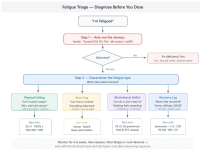
[DIAGRAM: recovery-monitoring-flowchart.svg Shows: Decision tree — "Are you fatigued?" → check bloodwork → identify category → select compound class → monitor specific markers Style: flowchart with decision diamonds]
Stacking Logic for Fatigue
Not every fatigue presentation needs every compound. Here's the practical decision framework:
General biohacker experiencing low energy, no PED use: Start with diagnostics (ferritin, thyroid, AM cortisol). If normal, consider: Semax (if cognitive fatigue) + NAD⁺ precursors (if >40 or metabolically compromised). Monitor for 4–6 weeks before adding more.
PED user, on-cycle fatigue: Likely causes: hepatic stress (oral AAS), oxidative accumulation, gut damage. Consider: TAD-600/glutathione (address liver/oxidative load) + BPC-157 (gut repair + systemic recovery). Ipamorelin + CJC-1295 (restore GH pulsatility if suppressed by exogenous GH use or if deep sleep is disrupted).
PED user, PCT fatigue: Likely causes: hormonal withdrawal, crashed estrogen, GH axis suppression, motivational deficit. Core protocol: HCG (maintain testicular function, ideally started on-cycle), Semax (address BDNF deficit from hormonal withdrawal). Optional: PE-22-28 (if anhedonia dominates the presentation — preclinical caveat applies). Ipamorelin + CJC-1295 (restore endogenous GH pulsatility).
Aging athlete (>35), general recovery decline: Likely causes: declining NAD⁺, reduced GH pulsatility, accumulated mitochondrial damage. Consider: SS-31 (mitochondrial restoration) + Ipamorelin/CJC-1295 (GH axis support) + TB-500 (connective tissue quality). Monitor via IGF-1, VO₂ max trends, and joint function.
Overweight user, metabolic fatigue: Primary intervention: tirzepatide or semaglutide (address the metabolic root cause). Secondary: BPC-157 (if GI side effects from GLP-1 agonists are limiting compliance). Do not add GH secretagogues until insulin sensitivity is normalized — GH worsens insulin resistance.
References
- Raun K, Hansen BS, Johansen NL, et al. Ipamorelin, the first selective growth hormone secretagogue. Eur J Endocrinol. 1998;139(5):552-561. PMID: 9849822 — Foundational pharmacology paper establishing ipamorelin's selectivity profile.
- Teichman SL, Neale A, Lawrence B, et al. Prolonged stimulation of growth hormone (GH) and insulin-like growth factor I secretion by CJC-1295, a long-acting analog of GH-releasing hormone, in healthy adults. J Clin Endocrinol Metab. 2006;91(3):799-805. PMID: 16352683 — CJC-1295 DAC pharmacokinetics and GH/IGF-1 elevation in humans.
- Steiger A, Guldner J, Hemmeter U, et al. Effects of growth hormone-releasing hormone and somatostatin on sleep EEG and nocturnal hormone secretion in male controls. Neuroendocrinology. 1992;56(4):566-573. PMID: 1484568 — GHRH promotes slow-wave sleep; mechanistic basis for GH secretagogue sleep benefits.
- Malinda KM, Sidhu GS, Mani H, et al. Thymosin beta4 accelerates wound healing. J Invest Dermatol. 1999;113(3):364-368. PMID: 10469334 — TB-500/Tβ4 wound healing acceleration.
- Jang M, Cai L, Udeani GO, et al. Muscle injury-induced thymosin β4 acts as a chemoattractant for myoblasts. J Cell Sci. 2010;123:3719-3727. PMID: 20880960 — Tβ4 chemoattractant role for satellite cells during muscle regeneration.
- Pickart L, Vasquez-Soltero JM, Margolina A. GHK peptide as a natural modulator of multiple cellular pathways in skin regeneration. Biomed Res Int. 2015;2015:648108. PMID: 26236730 — GHK-Cu mechanisms across tissue remodeling, antioxidant, and anti-inflammatory pathways.
- Jastreboff AM, Aronne LJ, Ahmad NN, et al. Tirzepatide once weekly for the treatment of obesity. N Engl J Med. 2022;387(3):205-216. PMID: 35658024 — SURMOUNT-1 trial; phase 3 RCT for tirzepatide in obesity.
- Wilding JPH, Batterham RL, Calanna S, et al. Once-weekly semaglutide in adults with overweight or obesity. N Engl J Med. 2021;384(11):989-1002. PMID: 33567185 — STEP 1 trial; phase 3 RCT for semaglutide in obesity.
- Sikiric P, et al. Stable gastric pentadecapeptide BPC 157 and striated, smooth, and heart muscle. Biomedicines. 2022;10(12):3107. PMID: 36551860 — BPC-157 myotendinous junction and muscle recovery review.
- Comninos AN, Jayasena CN, Dhillo WS. The relationship between gut and adipose hormones, and reproduction. Hum Reprod Update. 2014;20(2):153-174. PMID: 24173881 — Context for metabolic-hormonal interaction in PED users.
This completes the two-part series. Part 1 covered mitochondrial fatigue (SS-31, MOTS-c, NAD⁺), oxidative fatigue (glutathione), central fatigue (Semax, Selank, PE-22-28), and systemic recovery (BPC-157). Part 2 covered the GH/IGF-1 axis, tissue repair, hormonal recovery, and metabolic fatigue.