Fatigue is not one problem. It is at least four, and they respond to different interventions.
A lifter who can't finish sets they handled last month is not experiencing the same fatigue as someone who sleeps nine hours and still drags through the day. The first might have accumulated oxidative damage in skeletal muscle mitochondria. The second might have depleted NAD⁺ stores, or a BDNF deficit that makes their brain interpret ordinary effort as overwhelming. A third person — mid-cycle on AAS, running a caloric deficit — might have tanked their GH pulsatility and is now running on hormonal fumes. These are mechanistically distinct problems with mechanistically distinct solutions.
This two-part series maps the peptide landscape for fatigue and weakness. Part 1 covers the cellular and neurological foundations: mitochondrial energy production, oxidative stress buffering, and central fatigue. Part 2 covers the hormonal and structural recovery side: GH axis
Peptides, tissue repair compounds, and the specific fatigue patterns that emerge from PED use.
The question this article answers:
which peptide targets which type of fatigue, and what does the evidence actually support?
Quick-Reference Overview
| Compound | Primary fatigue target | You will likely notice | Evidence level |
|---|
| SS-31 (elamipretide) | Mitochondrial dysfunction, ATP deficit | Possibly improved exercise tolerance over weeks | Phase 2/3 clinical trials |
| MOTS-c | Exercise capacity decline, metabolic fatigue | Likely nothing subjective | Preclinical + human correlational |
| NAD⁺ / NMN / NR | Age-related metabolic decline | Likely nothing | Preclinical strong; human RCTs underwhelming |
| TAD-600 / Glutathione | Exercise-induced oxidative stress | Possibly reduced post-exercise soreness | Some human data (small trials) |
| Semax | Cognitive fatigue, brain fog, attention deficit | Improved focus within days | Approved anxiolytic/nootropic (Russia); human data |
| Selank | Anxiety-driven fatigue, HPA axis dysregulation | Reduced background anxiety | Approved anxiolytic (Russia); human data |
| PE-22-28 | Anhedonia, motivational fatigue | Possible mood lift within days | Preclinical only |
| BPC-157 | Systemic recovery, gut-fatigue connection | Possibly improved gut function | Preclinical only (extensive) |
Understanding What Fatigue Actually Is
Before covering compounds, it helps to understand the categories. Fatigue in performance contexts breaks down into four mechanistic buckets, and most people experience a mix:
Mitochondrial / metabolic fatigue — your cells cannot produce ATP efficiently. Mitochondrial cristae structure degrades with age, ROS exposure, and drug toxicity. The electron transport chain slows. You produce less energy per unit of substrate. This feels like a global, low-grade drain — not acute muscle failure, but a ceiling on total output.
Oxidative fatigue — reactive oxygen species accumulate beyond what your antioxidant systems (primarily glutathione, SOD, catalase) can neutralize. In moderate amounts, ROS are signaling molecules that drive adaptation. In excess, they damage proteins, lipids, and DNA. The result is prolonged DOMS, slower recovery between sessions, and a sense that you're never fully "ready" for the next training block.
Central / neurological fatigue — your brain's neurotrophic and neurotransmitter systems are underperforming. Low BDNF reduces synaptic plasticity and makes cognitive tasks feel harder than they should. Disrupted serotonergic/dopaminergic signaling produces brain fog, motivational deficit, or the kind of fatigue that sleep doesn't fix. This is common after prolonged stress, sleep disruption, or during PCT when hormonal withdrawal affects mood.
Hormonal / structural fatigue — covered in Part 2. This involves GH axis suppression, tissue repair bottlenecks, and the specific recovery deficits created by AAS use or aggressive caloric restriction.
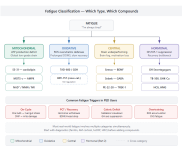
[DIAGRAM: fatigue-classification-flowchart.svg Shows: Four fatigue types branching from "Fatigue" root, with compound classes mapped to each type
Mitochondrial Fatigue — Restoring the Power Plant
SS-31 (Elamipretide) — stabilizing the inner membrane
What to expect
You will not feel SS-31 working acutely. Over weeks, you may notice improved exercise tolerance — the ability to sustain output longer before hitting a wall. The mechanism is structural, not stimulatory: SS-31 restores the physical architecture of your mitochondria. Track via exercise performance metrics (time to exhaustion, sustained power output) rather than subjective energy. Relevant for: aging athletes, anyone with suspected mitochondrial dysfunction, users of cardiotoxic compounds (e.g. doxorubicin).
SS-31 is a synthetic tetrapeptide (D-Arg-Dmt-Lys-Phe-NH₂) that selectively targets the inner mitochondrial membrane by binding
cardiolipin — a phospholipid critical for maintaining cristae structure and electron transport chain (ETC) function. Cardiolipin holds the ETC complexes in the correct spatial arrangement. When cardiolipin is oxidized or displaced (which happens with aging, ischemia, and drug toxicity), the complexes drift apart, electron transfer becomes inefficient, and ATP production drops while ROS leak increases.
SS-31 stabilizes the cardiolipin-complex interaction. This has two downstream effects: ATP output per unit of oxygen increases, and superoxide generation at Complex I and III decreases. In aged mouse skeletal muscle, a single SS-31 treatment improved mitochondrial coupling and maximal ATP production. Extended treatment reversed age-related declines in exercise tolerance and improved ADP sensitivity through the adenine nucleotide translocator (ANT).
The clinical pipeline is active. SS-31 (as elamipretide) has been through Phase 2/3 trials for Barth syndrome (a genetic cardiolipin disorder), heart failure with preserved ejection fraction, and primary mitochondrial myopathy. Results have been mixed — the Barth syndrome data was the most convincing, while heart failure trials showed functional improvements that didn't always clear significance thresholds.
For PED users specifically
AAS-related cardiac stress, stimulant use, and DNP all increase mitochondrial oxidative burden. SS-31's mechanism addresses the downstream damage these compounds create. It does not fix the cause — it patches the consequence.
Evidence tier: Phase 2/3 clinical trials (mitochondrial diseases); preclinical for exercise performance in healthy populations.
MOTS-c — the exercise mimetic from mitochondrial DNA
What to expect
You will feel nothing. MOTS-c operates entirely below the threshold of perception. It regulates gene expression related to metabolism and stress adaptation in skeletal muscle. There is no subjective "energy boost." Track via metabolic markers (fasting glucose, insulin sensitivity) and exercise performance over weeks to months. Relevant for: aging populations, metabolically compromised users, those in prolonged caloric deficit.
MOTS-c is unusual because it is encoded by mitochondrial DNA — specifically, a short open reading frame within the 12S rRNA gene. This makes it a
mitochondrial-derived peptide (MDP), meaning your mitochondria are directly signaling the nucleus about cellular energy status. The peptide is upregulated by exercise and stress, and its expression declines with age.
The mechanism centers on the
Folate-AICAR-AMPK pathway. MOTS-c activates AMPK (AMP-activated protein kinase), the cell's primary energy sensor. When AMPK detects low energy status, it shifts metabolism toward glucose uptake, fatty acid oxidation, and mitochondrial biogenesis. Under stress, MOTS-c translocates to the nucleus, where it regulates expression of genes carrying antioxidant response elements (ARE).
In aged mice, systemic MOTS-c injection improved treadmill performance (time, distance, and sprint capacity), reversed age-related skeletal muscle insulin resistance, and shifted muscle metabolomics toward patterns associated with younger tissue. In young exercising mice, MOTS-c enhanced exercise capacity on both normal and high-fat diets.
Human data is correlational: circulating MOTS-c levels are higher in physically active individuals and decline with age. An exercise study in young men showed MOTS-c levels increase acutely in both blood and skeletal muscle following exercise. No human RCTs of exogenous MOTS-c administration have been published.
The biohacker reality
MOTS-c is conceptually appealing as an "exercise mimetic" but the evidence base is entirely preclinical for exogenous use. If you're already training, you're already producing it. If you're not training, no peptide is a substitute for the stimulus.
Evidence tier: Preclinical (strong in animal models); human data limited to observational/correlational.
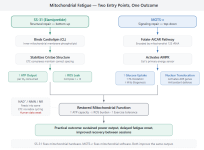
[DIAGRAM: mitochondrial-pathway.svg Shows: SS-31 and MOTS-c mechanisms converging on mitochondrial function — SS-31 via cardiolipin/ETC stabilization, MOTS-c via AMPK/nuclear signaling
NAD⁺ / NMN / NR — the metabolic currency everyone is selling
What to expect
You will almost certainly feel nothing. NAD⁺ precursors (NMN, NR) raise blood NAD⁺ levels reliably, but the translation to skeletal muscle function in humans has been underwhelming. If you are genuinely NAD⁺-depleted (severe aging, chronic illness, high alcohol intake), you might notice improved exercise recovery. For a healthy person under 40 with adequate nutrition, the marginal benefit is likely negligible. Track via blood NAD⁺ metabolomics if available.
NAD⁺ (nicotinamide adenine dinucleotide) is a coenzyme required for virtually every metabolic reaction that converts food into ATP. It participates in glycolysis, the citric acid cycle, and oxidative phosphorylation. Beyond energy metabolism, NAD⁺ is consumed by sirtuins (SIRT1-7, which regulate mitochondrial biogenesis, DNA repair, and inflammation) and PARPs (which handle DNA damage repair). When NAD⁺ levels drop — through aging, overtraining, chronic inflammation, or excessive alcohol — all of these processes slow.
The
salvage pathway recycles NAD⁺ via NAMPT (nicotinamide phosphoribosyltransferase), which converts nicotinamide into NMN, then into NAD⁺. Eliminating NAMPT in mouse skeletal muscle reduced NAD⁺ content by 85%, causing severe metabolic dysfunction. NMN and NR supplementation bypass different steps in this pathway to replenish the pool.
Preclinical data is strong: aged mice receiving NMN or NR show improved mitochondrial function, better insulin sensitivity, increased exercise capacity, and extended healthspan. The human translation has been disappointing. A 2025 meta-analysis of RCTs in adults over 60 found NMN and NR supplementation showed
no significant effects on skeletal muscle index, handgrip strength, gait speed, or functional performance tests. The gap between rodent promise and human results remains wide.
The honest assessment
NAD⁺ precursors are not snake oil — the underlying biology is real. But the current human evidence does not support their use for performance-oriented fatigue in otherwise healthy adults. They may have a role in specific deficiency states (chronic disease, severe alcohol history, advanced aging), and combining them with exercise training — rather than using them as a substitute — is the most plausible application. They are included here because they are widely marketed for fatigue and the reader deserves to know the evidence gap.
Evidence tier: Preclinical strong; human RCTs negative for muscle performance in adults >60. No performance data in younger populations.
Oxidative Fatigue — Buffering the Damage
TAD-600 / Glutathione — the endogenous antioxidant defense
What to expect
Subjective effects are subtle to absent. Some users report reduced DOMS and faster perceived recovery, but these are hard to distinguish from placebo. Glutathione's role in exercise fatigue is mechanistically real — it buffers ROS that directly impair muscle contraction — but oral bioavailability is poor, and the timing of supplementation matters. Track via serum glutathione levels (reduced/oxidized ratio) and subjective recovery logs.
Glutathione (GSH) is a tripeptide (glutamate-cysteine-glycine) and the most abundant intracellular antioxidant in human cells. In skeletal muscle, it neutralizes superoxide and hydrogen peroxide produced during contraction, protecting the Na⁺/K⁺-ATPase pump that maintains membrane excitability. When glutathione is depleted by sustained high-intensity exercise, muscle contractile force drops and fatigue accelerates.
A controlled study in mice and humans (double-blind crossover, n=8 healthy men) found that oral glutathione supplementation (1 g/day for 2 weeks) improved lipid metabolism during exercise, reduced muscle acidification, and lowered blood lactate after a standardized bout. The mechanism was linked to PGC-1α (peroxisome proliferator-activated receptor gamma coactivator 1-alpha) activation and AMPK signaling — suggesting glutathione doesn't just passively mop up ROS but actively shifts muscle toward more efficient aerobic metabolism.
The timing caveat is important
Antioxidant supplementation
before ROS reach their physiological signaling peak can blunt beneficial exercise adaptations (mitochondrial biogenesis, insulin sensitivity improvements). Supplementing
after the adaptation window — post-workout or on rest days — is the safer strategy if the goal is reduced fatigue without blunting gains. This is not unique to glutathione; it applies to vitamin C, N-acetylcysteine, and most exogenous antioxidants.
TAD-600 is an injectable glutathione formulation (600 mg IV or IM) that bypasses the oral bioavailability problem. Whether the injectable route produces meaningfully different results for exercise fatigue specifically is not well-studied — most clinical glutathione research uses oral or IV dosing for liver disease or skin lightening rather than performance.
For PED users
Oral AAS (17-alpha-alkylated steroids like Anavar, Winstrol, Dianabol) deplete hepatic glutathione through first-pass liver metabolism. Injectable glutathione or its precursor NAC during oral cycles addresses a real, measurable deficit — not a theoretical one.
Evidence tier: Some human data (small crossover trial); strong mechanistic basis; injectable form unstudied for exercise fatigue specifically.
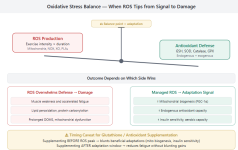
[DIAGRAM: oxidative-stress-balance.svg Shows: ROS production during exercise balanced against GSH/SOD/catalase system, with tipping point toward damage when antioxidants are overwhelmed
Central Fatigue — When the Brain Is the Bottleneck
Semax — the BDNF accelerator
What to expect
Improved focus and mental clarity within 3–5 days, becoming more pronounced over a 10–14 day cycle. The effect is qualitative rather than stimulatory — tasks feel less effortful, sustained attention improves, and the motivational gap between "wanting to do something" and "doing it" narrows. Not a stimulant. No crash. Cycling is mandatory (10–14 days on, 7–10 off) because constant TrkB receptor stimulation leads to desensitization. Relevant for: cognitive fatigue, post-cycle mood disruption, chronic stress-induced brain fog.
Semax (Met-Glu-His-Phe-Pro-Gly-Pro) is a synthetic heptapeptide derived from the ACTH(4-10) fragment, with a C-terminal Pro-Gly-Pro extension that resists enzymatic degradation. It is approved in Russia as a pharmaceutical for stroke recovery and cognitive disorders. The primary mechanism is
BDNF upregulation: a single intranasal dose produces a 1.4-fold increase in BDNF protein and a 3-fold increase in BDNF mRNA expression in the rat hippocampus, along with 1.6-fold increased TrkB (BDNF receptor) phosphorylation.
Why this matters for fatigue: BDNF is the primary growth factor for synaptic plasticity — the brain's ability to form, strengthen, and reorganize neural connections. When BDNF is low (chronic stress, sleep deprivation, hormonal withdrawal during PCT), the brain operates with reduced synaptic efficiency. Ordinary cognitive tasks require disproportionate effort. This is the neurological basis of "brain fog" — not a vague metaphor, but a measurable deficit in neurotrophic support.
Beyond BDNF, Semax modulates serotonergic, dopaminergic, and cholinergic systems. It does not simply increase neurotransmitter levels (that's what stimulants do); it changes which proteins the brain produces. This is gene expression modification, not receptor flooding — which is why effects take days to appear and why cycling prevents desensitization.
A 2018 study in 110 post-stroke patients showed Semax raised plasma BDNF levels regardless of rehabilitation timing, with higher BDNF correlating to faster functional recovery.
Evidence tier: Approved pharmaceutical (Russia) for stroke and cognitive disorders; multiple human studies; standard nootropic dose: 600–1200 mcg/day intranasally.
Selank — the anxiolytic that fixes fatigue by removing the brake
What to expect
Reduced background anxiety within the first few days. The effect is not sedation — it's the removal of a constant low-grade stress signal that consumes cognitive resources. If your fatigue has an anxiety component (racing thoughts at rest, difficulty "switching off," HPA axis hyperactivation), Selank may free up bandwidth you didn't realize was occupied. Standard dose: 400–600 mcg/day intranasally.
Selank is a synthetic peptide analog of tuftsin (a naturally occurring immunomodulatory peptide) with an identical Pro-Gly-Pro C-terminal extension to Semax. It is approved in Russia as an anxiolytic. Its mechanism involves GABAergic modulation and stabilization of enkephalin metabolism — it slows the degradation of endogenous enkephalins, which are the body's own anti-anxiety
Peptides.
The fatigue connection is indirect but real: chronic anxiety consumes metabolic and cognitive resources. The HPA axis (hypothalamic-pituitary-adrenal axis) in a hyperactivated state elevates cortisol, disrupts sleep architecture, and diverts energy from recovery toward stress vigilance. Selank interrupts this cycle without the sedation or cognitive blunting of benzodiazepines.
Evidence tier: Approved anxiolytic (Russia); some human data; preclinical for GABAergic mechanism.
PE-22-28 — the motivational fatigue compound
What to expect
If your fatigue is driven by anhedonia (inability to feel reward or motivation) rather than physical exhaustion, PE-22-28 may produce a noticeable shift in drive and engagement within 4–7 days. This is not euphoria — it's the restoration of normal reward signaling. If your fatigue is purely physical or metabolic, this compound is irrelevant to you. Preclinical only — no human data exists.
PE-22-28 (Mini-Spadin) is a synthetic heptapeptide that selectively inhibits
TREK-1 (TWIK-related potassium channel 1) — a two-pore domain potassium channel expressed in the brain. TREK-1 normally acts as a brake on neuronal excitability: when the channel is open, potassium ions flow out of the neuron, making it harder to fire. Mice with TREK-1 genetically deleted are resistant to depression.
PE-22-28 blocks TREK-1 with an IC₅₀ of ~0.12 nM (compared to ~40-60 nM for its parent compound Spadin), enhancing neuronal excitability and serotonergic transmission. In mouse behavioral models, 4 days of PE-22-28 administration reduced depressive behaviors by ~30%, induced measurable neurogenesis (new neuron formation), and increased PSD-95 expression (a marker of synaptogenesis — new synaptic connections). The action duration extends to ~23 hours per dose.
The fatigue relevance
Some fatigue — especially during PCT, after prolonged caloric deficit, or during chronic stress — presents as motivational deficit rather than physical exhaustion. The person has the physical capacity to train but cannot generate the internal drive to do it. This is anhedonic fatigue, and it operates through different circuits than mitochondrial or oxidative fatigue. PE-22-28 targets these circuits specifically.
Caution
The evidence base is entirely preclinical. No human trials. The TREK-1 mechanism is well-characterized, but translating mouse forced-swim tests to human fatigue experience is a large inferential leap.
Evidence tier: Preclinical only.
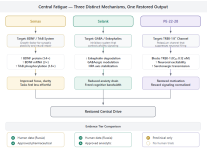
[DIAGRAM: central-fatigue-pathways.svg Shows: Three pathways — Semax→BDNF→synaptic plasticity, Selank→GABA/enkephalin→anxiety reduction, PE-22-28→TREK-1 block→neuronal excitability — converging on "restored central drive"]
Systemic Recovery — The Connector
BPC-157 — the NO regulator that doesn't fit a single category
What to expect
Subjective effects are variable and depend on what's broken. If gut inflammation is contributing to systemic fatigue (and in many PED users on oral compounds, it is), you may notice improved digestion, reduced bloating, and a secondary improvement in energy within 1–2 weeks. If gut function is normal, you likely won't feel much. BPC-157 is a systemic recovery accelerator, not an energy compound. Track via gut symptoms, injury healing timelines, and inflammatory markers.
BPC-157 (Body Protection Compound-157) is a 15-amino-acid peptide derived from human gastric juice. It doesn't fit neatly into the mitochondrial, oxidative, or central fatigue categories because it operates across all of them through a common mechanism:
nitric oxide (NO) system regulation.
BPC-157 modulates NO levels bidirectionally — increasing NO when it's pathologically low (poor circulation, impaired endothelial function) and reducing NO-derived cytotoxicity when it's pathologically high (acute inflammation, ischemia-reperfusion injury). The pathway involves Src kinase → Cav-1 phosphorylation → eNOS activation, promoting endothelial function and angiogenesis (new blood vessel formation) via VEGFR2-Akt signaling.
For fatigue specifically, the relevance is twofold:
- Vascular efficiency. Better NO regulation means better blood flow to working muscle, better nutrient delivery, and better waste clearance. This doesn't produce an acute "pump" — it removes a chronic bottleneck.
- Gut-fatigue axis. The gut is the primary absorption site for nutrients that fuel every process discussed in this article. Oral AAS, NSAIDs, and chronic stress all damage gut mucosal integrity. BPC-157's cytoprotective effects on gastric and intestinal epithelium restore the foundation that other compounds depend on.
For PED users
BPC-157 is one of the most broadly applicable
Peptides in a stack because it addresses the systemic infrastructure that other compounds rely on. It's not exciting; it's foundational.
Evidence tier: Extensive preclinical (hundreds of studies across tissue types); no published human RCTs.
What You Won't Feel — and What to Actually Measure
| Compound | Felt effect | Timeline | What to actually track |
|---|
| SS-31 | Possibly improved exercise tolerance | Weeks | Time to exhaustion, sustained power output, VO₂ max |
| MOTS-c | None | Weeks–months | Fasting glucose, insulin sensitivity, exercise performance |
| NAD⁺ / NMN / NR | None in most users | Weeks | Blood NAD⁺ metabolomics (if available), mitochondrial function panels |
| TAD-600 / Glutathione | Possibly reduced DOMS | Days–weeks | Serum GSH/GSSG ratio, CRP, recovery between sessions |
| Semax | Improved focus, reduced brain fog | 3–5 days | Subjective cognitive performance, sustained attention, task switching |
| Selank | Reduced background anxiety | 2–5 days | Sleep quality, resting heart rate, HRV, cortisol (AM) |
| PE-22-28 | Possible mood/motivation shift | 4–7 days | Subjective motivation logs, anhedonia scale |
| BPC-157 | Variable (gut-dependent) | 1–2 weeks | Gut symptoms, inflammatory markers, injury healing rate |
Core monitoring toolkit (regardless of compound)
These measurements apply universally to anyone managing fatigue:
- HRV (heart rate variability) — the single best proxy for autonomic recovery status. Track daily, trend weekly.
- Resting heart rate — elevation >5 bpm above personal baseline signals accumulated stress.
- Sleep architecture — total hours is less important than deep sleep percentage. A sleep tracker that reports sleep stages (even imperfectly) is more useful than one that only reports total time.
- AM cortisol — a single fasted morning cortisol level distinguishes HPA axis dysfunction from other fatigue causes. Cheap, underused.
- hsCRP — high-sensitivity C-reactive protein. A general inflammation marker. Elevated hsCRP with fatigue suggests systemic inflammation as the driver.
- Ferritin — iron deficiency is the most common correctable cause of fatigue, and it's missed constantly. Check before adding peptides.
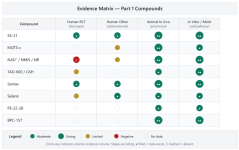
[DIAGRAM: evidence-matrix-part1.svg Shows: Evidence matrix with compounds as rows and evidence domains (human RCT, human observational, animal in vivo, in vitro) as columns, with filled/open circles indicating strength
References
- Szeto HH. First-in-class cardiolipin-protective compound as a therapeutic agent to restore mitochondrial bioenergetics. Br J Pharmacol. 2014;171(8):2029-2050. PMID: 24117165 — Foundational review of SS-31/elamipretide mechanism via cardiolipin binding.
- Pharaoh G, Kamat V, Kannan S, et al. The mitochondrially targeted peptide elamipretide (SS-31) improves ADP sensitivity in aged mitochondria by increasing uptake through the adenine nucleotide translocator (ANT). GeroScience. 2023;45:4539-4552. PMID: 37464137 — SS-31 reversal of age-related ADP insensitivity in skeletal muscle.
- Reynolds JC, Lai RW, Woodhead JST, et al. MOTS-c is an exercise-induced mitochondrial-encoded regulator of age-dependent physical decline and muscle homeostasis. Nat Commun. 2021;12:470. PMID: 33473109 — Key study establishing MOTS-c as exercise-responsive MDP with age-related decline.
- Lee C, Zeng J, Drew BG, et al. The mitochondrial-derived peptide MOTS-c promotes metabolic homeostasis and reduces obesity and insulin resistance. Cell Metab. 2015;21(3):443-454. PMID: 25738459 — Original discovery paper for MOTS-c and its metabolic functions.
- Campelj D, Philp A. NAD⁺ Therapeutics and Skeletal Muscle Adaptation to Exercise in Humans. Sports Med. 2023;53:119-134. PMID: 36324009 — Comprehensive review of NAD⁺ metabolism in skeletal muscle and supplementation approaches.
- Bellanti F, Lo Buglio A, Vendemiale G. The Effect of Nicotinamide Mononucleotide and Riboside on Skeletal Muscle Mass and Function: A Systematic Review and Meta-Analysis. J Cachexia Sarcopenia Muscle. 2025. PMID: 40181489 — Meta-analysis showing no significant muscle performance benefits of NMN/NR in adults >60.
- Aoi W, Ogaya Y, Takami M, et al. Glutathione supplementation suppresses muscle fatigue induced by prolonged exercise via improved aerobic metabolism. J Int Soc Sports Nutr. 2015;12:7. PMID: 25685110 — Double-blind crossover trial showing glutathione improved lipid metabolism and reduced muscle acidification during exercise.
- Eremin KO, Kudrin VS, Grivennikov IA, et al. Semax, an analog of ACTH(4-10) with cognitive effects, regulates BDNF and trkB expression in the rat hippocampus. Brain Res. 2006;1117(1):54-60. PMID: 16996037 — Foundational study on Semax → BDNF/TrkB upregulation in hippocampus.
- Borsotto M, Bhakta C, Bhéreur L, et al. Shortened Spadin Analogs Display Better TREK-1 Inhibition, In Vivo Stability and Antidepressant Activity. Front Pharmacol. 2017;8:643. PMID: 28955242 — PE-22-28 characterization: IC₅₀, behavioral efficacy, neurogenesis, extended duration.
- Sikiric P, et al. Stable gastric pentadecapeptide BPC 157 and striated, smooth, and heart muscle. Biomedicines. 2022;10(12):3107. PMID: 36551860 — BPC-157 review covering myotendinous junction repair and muscle recovery mechanisms.
Part 2 covers GH axis peptides, tissue repair compounds, and the specific fatigue patterns created by PED use — including ipamorelin, CJC-1295, GHRP-2/6, hexarelin, somatropin, IGF-1 LR3, PEG-MGF, TB-500, GHK-Cu, HCG/HMG, and tirzepatide.